-
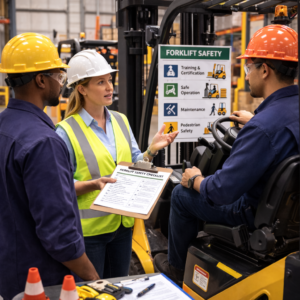 Administer a forklift safety program: authorization and refresher training, inspection and maintenance controls, site rules, incident learning, and records management to reduce truck-related risks.
 -
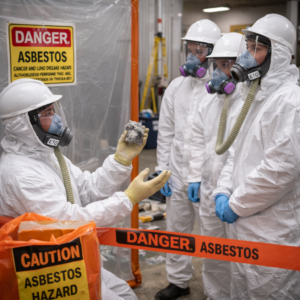 Formação em sensibilização e controlo do amianto que aborda os riscos para a saúde, os locais onde o amianto pode estar presente, o reconhecimento e a comunicação, a prevenção da exposição e as práticas de trabalho seguras para evitar perturbar materiais que contenham amianto (MCA).
 -
Formación en concienciación y control del amianto que abarca los riesgos para la salud, dónde puede encontrarse el amianto, su identificación y notificación, la prevención de la exposición y las prácticas de trabajo seguras para evitar alterar los MCA.
-
Formation de sensibilisation à l’amiante et de contrôle des risques couvrant les effets sur la santé, les lieux où l’amiante peut être présente, sa reconnaissance et son signalement, la prévention de l’exposition et les pratiques de travail sûres pour éviter de perturber des matériaux contenant de l’amiante (MCA).
-
Formazione sulla consapevolezza e sul controllo dell'amianto che tratta i rischi per la salute, i luoghi in cui l'amianto può essere presente, il riconoscimento e la segnalazione, la prevenzione dell'esposizione e le pratiche di lavoro sicure per evitare di disturbare i materiali contenenti amianto (MCA).
-
 Fundamentos da gestão de segurança na construção: responsabilidades de liderança, permissões, supervisão, coordenação de empreiteiros e inspeções para controlar atividades de alto risco e reduzir incidentes.
 -
Fundamentos de la gestión de la seguridad en la construcción: responsabilidades de liderazgo, permisos, supervisión, coordinación de contratistas e inspecciones para controlar actividades de alto riesgo y reducir incidentes.
-
 Glutaraldehyde safety covering health effects, safe use and ventilation, PPE, spill response, storage and disposal basics, and reporting to reduce exposure during disinfection tasks.
 -
Grundlagen des Sicherheitsmanagements im Bauwesen: Führungsverantwortung, Genehmigungen, Aufsicht, Koordination von Auftragnehmern und Inspektionen zur Kontrolle von Hochrisikoaktivitäten und zur Verringerung von Vorfällen.
-
 Cleaning and disinfecting guidance covering product selection, contact times, PPE, ventilation, safe chemical handling, and prioritizing high-touch surfaces to improve hygiene without increasing exposure risks.
 -
 Hand and power tool safety: correct tool selection, inspection, guarding, safe handling, maintenance, and PPE to reduce cuts, flying debris injuries, and shock risks.
 -
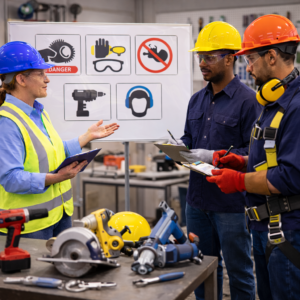 Hand and power tool safety: correct tool selection, inspection, guarding, safe handling, maintenance, and PPE to reduce cuts, flying debris injuries, and shock risks.
 -
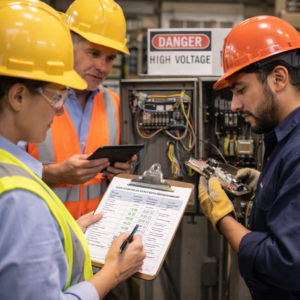 Hazard analysis and control training: identify hazards, assess risk, choose controls using the hierarchy of controls, and verify effectiveness through inspections and feedback.
 -
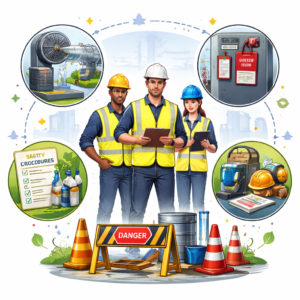 Hazard controls fundamentals using the hierarchy of controls, including engineering and administrative measures and PPE, plus practical verification through inspections and corrective actions.
 -
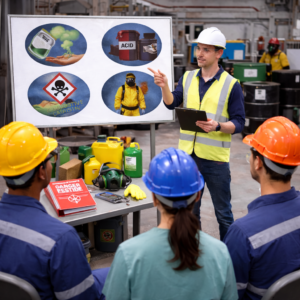 Hazardous chemicals training covering exposure routes, labeling and SDS use, safe storage/handling, control measures, and spill response basics to reduce injuries and occupational illness.
 -
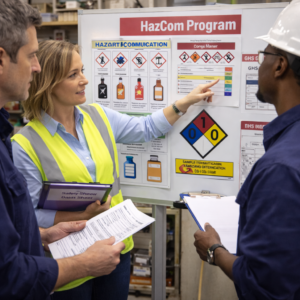 Build a HazCom program: chemical inventory, labeling, SDS management, exposure controls, employee training, and periodic audits so workers understand chemical hazards and safe handling.
 -
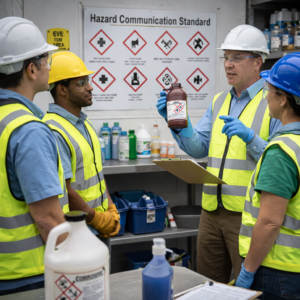 Employee HazCom training on labels and pictograms, SDS use, exposure routes, safe handling and storage, spill response basics, and reporting to prevent chemical injuries and illness.
 -
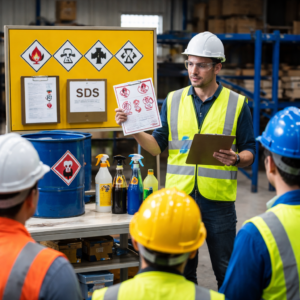 Hazard communication training covering labels, SDS, pictograms, exposure controls, safe storage/handling, and spill response fundamentals for safer chemical use.
 -
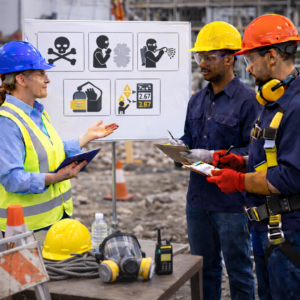 Practical training on Health Hazards in Construction Training covering key hazards, safe work practices, and control measures, with simple checklists and reporting steps to help prevent incidents and improve safety performance.
 -
 Hearing conservation program administration: exposure assessment, control options, hearing protection selection, training, audiometry coordination, and records to prevent noise?induced hearing loss.
 -
 Noise and hearing protection training covering exposure awareness, control strategies, and correct selection and use of hearing protection to prevent hearing loss.
 -
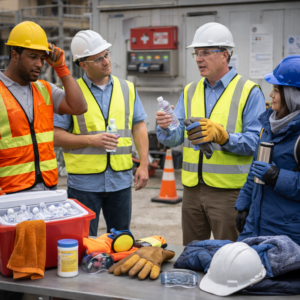 Heat and cold stress safety covering risk factors, early warning signs, protective measures, work planning, and emergency response for temperature extremes.
 -
 Employee heat illness prevention covering hydration, acclimatization, early symptom recognition, safe work practices, and escalation steps for hot-weather work.
 -
 Supervisor heat illness prevention covering acclimatization, work/rest planning, hydration strategy, symptom recognition, monitoring, and emergency response to prevent heat-related incidents.
 -
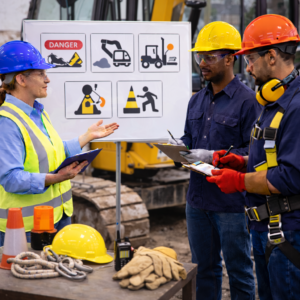 Heavy equipment safety covering pre-use checks, safe operating zones, spotter communication, blind-spot awareness, ground conditions, and maintenance isolation to prevent struck?by and rollover incidents.
 -
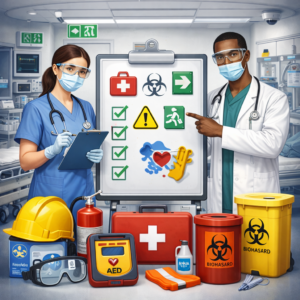 Emergency room safety covering violence risk reduction, exposure and sharps controls, safe patient handling, and rapid reporting to support safer care in fast-paced clinical settings.
 -
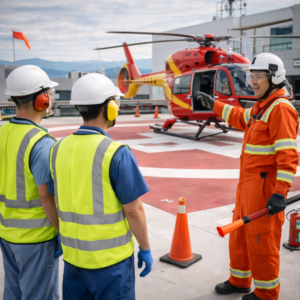 Hospital heliport safety covering access control, safe approach routes, communications, rotor wash hazards, and emergency procedures to reduce risks during helicopter operations.
 -
 Incident investigation training covering scene control, evidence gathering, interviews, causal analysis, and corrective action planning to prevent repeat events.
 -
 Intro to industrial electrical controls: common components, basic circuits, safe troubleshooting mindset, and key hazards when working around control panels and machinery.
 -
 Industrial hygiene fundamentals: recognize and evaluate exposures (chemical, physical, biological) and apply control strategies, with an introduction to basic monitoring concepts and exposure prevention.
 -
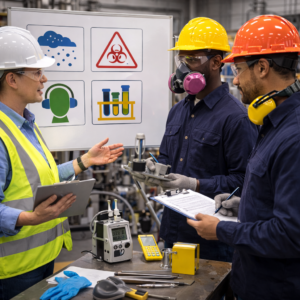 Industrial hygiene fundamentals: recognize and evaluate exposures (chemical, physical, biological) and apply control strategies, with an introduction to basic monitoring concepts and exposure prevention.
 -
 JHA fundamentals covering task-based hazard identification, control selection, worker involvement, documentation, and review cycles for safer routine and non?routine work.
 -
 Safety management fundamentals covering policy, planning, hazard/risk controls, training, inspections, incident learning, and continuous improvement for a practical safety program.
 -
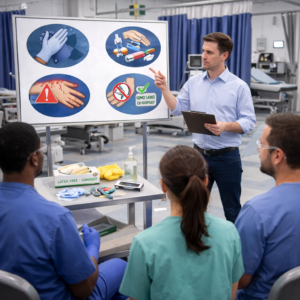 Latex allergy training covering sources of exposure, symptoms and response, substitution options, and safe work practices to prevent allergic reactions in latex-use environments.
 -
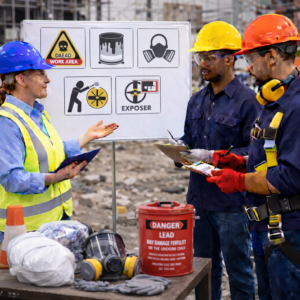 Lead safety (Construction) covering health effects, exposure routes, high-risk tasks, engineering controls, hygiene practices, PPE/respiratory awareness, and program elements to reduce exposure and support compliance.
 -
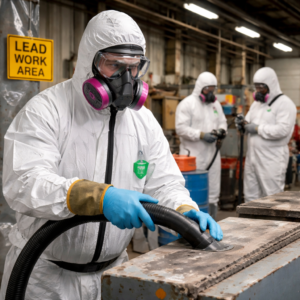 Lead safety (General industry) covering health effects, exposure routes, high-risk tasks, engineering controls, hygiene practices, PPE/respiratory awareness, and program elements to reduce exposure and support compliance.
 -
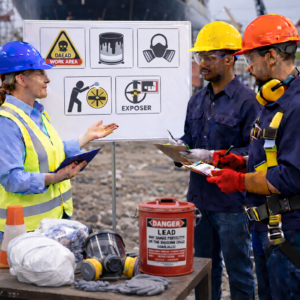 Lead safety (Shipyards) covering health effects, exposure routes, high-risk tasks, engineering controls, hygiene practices, PPE/respiratory awareness, and program elements to reduce exposure and support compliance.
 -
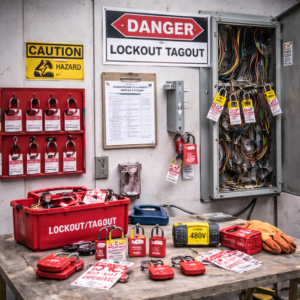 Lockout/Tagout training covering energy isolation, shutdown and verification steps, servicing practices, group lockout basics, and common errors that lead to unexpected start?up injuries.
 -
 Machine safeguarding and guarding essentials: identify hazards, choose guarding methods, set safe distances, perform inspections, and apply energy-isolation awareness to prevent entanglement, crush, and cut injuries.
 -
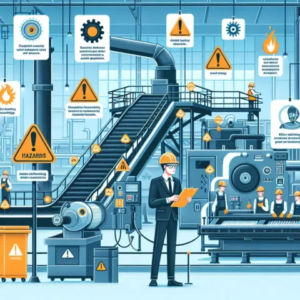 Machine safeguarding and guarding essentials: identify hazards, choose guarding methods, set safe distances, perform inspections, and apply energy-isolation awareness to prevent entanglement, crush, and cut injuries.
 -
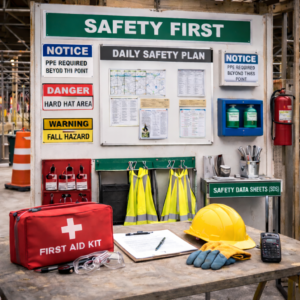 Practical training on Managing Safety & Health - Construction Essentials covering key hazards, safe work practices, and control measures, with simple checklists and reporting steps to help prevent incidents and improve safety performance.
 -
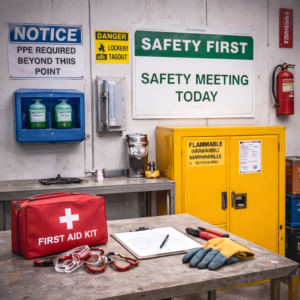 Practical training on Managing Safety & Health - General Industry Essentials covering key hazards, safe work practices, and control measures, with simple checklists and reporting steps to help prevent incidents and improve safety performance.
 -
 Manage stress and violence risks by identifying triggers, improving reporting and response, applying de-escalation and support practices, and strengthening policies for safer workplaces.
 -
 Material handling safety covering lifting and carrying techniques, mechanical aids, load stability, storage practices, and ergonomic controls to reduce strains, crush hazards, and struck-by incidents.
 -
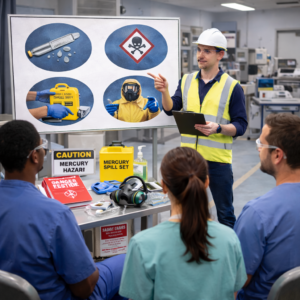 Mercury safety training covering exposure risks, spill prevention and response, safe cleanup practices, storage and disposal basics, and reporting to reduce mercury-related health risks.
 -
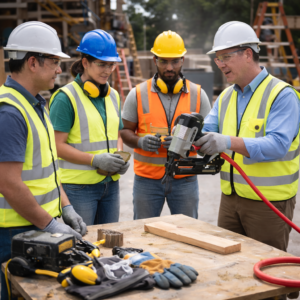 Nail gun safety covering trigger types, safe handling, positioning, material checks, PPE, and housekeeping to prevent puncture injuries and unintended discharge incidents.
 -
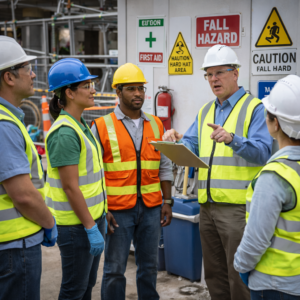 Practical training on Occupational Safety and Health Fundamentals covering key hazards, safe work practices, and control measures, with simple checklists and reporting steps to help prevent incidents and improve safety performance.
 -
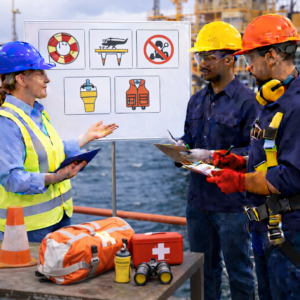 Offshore oil and gas safety essentials covering permit-to-work mindset, hazard awareness, lifting and dropped-object controls, isolation awareness, emergency response, and safe behaviors offshore.