Heat Injury Illness Prevention for Supervisors
Give supervisors the tools to prevent heat incidents before they disrupt people, productivity, and operations.
When temperatures rise, waiting to react is already too late. This course helps supervisors plan smarter, monitor better, and respond faster so teams can work more safely in heat-risk environments with greater confidence and consistency.
Why supervisor-level heat prevention matters
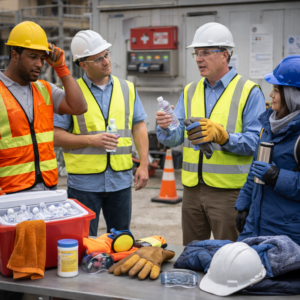
Heat-related illness can escalate quickly from fatigue and dehydration to medical emergencies that stop work, expose workers to serious harm, and create avoidable downtime. Frontline supervisors play the critical role in planning tasks, adjusting conditions, recognizing warning signs, and making the call to intervene early.
This training is designed to help leaders move from basic awareness to practical control. It turns heat safety into a repeatable part of daily supervision, not a last-minute reaction when conditions become dangerous.
What this course helps supervisors achieve
Plan More Effectively
Build safer work-rest schedules, hydration strategies, and acclimatization plans before the shift begins.
Recognize Warning Signs Earlier
Spot symptoms quickly, monitor crews more closely, and act before heat stress turns into a serious incident.
Respond with Confidence
Know when to adjust the plan, stop work, escalate to emergency response, and protect workers without delay.
Improve Crew Performance
Create clearer expectations, stronger communication, and more consistent heat-safety habits across every shift.
Course Overview
This Heat Injury Illness Prevention for Supervisors course gives frontline leaders practical guidance for controlling heat risk before it becomes an emergency. It focuses on the decisions supervisors make every day, from pre-task planning and monitoring conditions to identifying symptoms and taking fast, appropriate action.
Learners will strengthen their ability to manage hydration, work-rest planning, acclimatization, clothing and PPE adjustments, heavy-work exposures, buddy systems, documentation, and site readiness measures such as shade and first-aid preparation. The result is safer supervision, stronger compliance, and more dependable field performance.
Learning Outcomes
- Understand the supervisor’s role in preventing heat-related illness and reducing operational disruption.
- Build effective work-rest schedules, hydration plans, and acclimatization strategies for heat-risk tasks.
- Recognize early signs and symptoms of heat stress, dehydration, heat exhaustion, and heat stroke.
- Know when to intervene, adjust work plans, stop work, and escalate to emergency response.
- Identify how PPE, radiant heat, heavy physical work, and environmental conditions increase risk and require stronger controls.
- Use monitoring, buddy systems, and communication practices to improve crew awareness and early reporting.
- Strengthen documentation, handoffs, and daily supervision practices that support compliance and consistency.
- Improve site readiness through practical preparation measures such as shade, recovery planning, and first-aid readiness.
Who This Is For
Supervisors
Foremen
Team leads
Field leaders responsible for planning work
Managers monitoring conditions and crews
Leads coordinating contractor and crew handoffs
Why this training adds real value
Heat incidents are rarely caused by temperature alone. They happen when warning signs are missed, plans are not adjusted, and response happens too late. That is why supervisor-level training matters so much.
This course helps leaders turn expectations into action by giving them a shared framework for monitoring, decision-making, communication, and escalation. That means fewer surprises, stronger compliance, and safer performance in demanding conditions.
Lead heat safety with clarity and confidence
Equip your supervisors with practical prevention steps, clear response triggers, and stronger planning habits that protect crews, reduce downtime, and support safer operations every day.
Related topics: fire safety, fire prevention, emergency response, evacuation procedures, fire extinguishers, ignition sources, hot work safety, alarm systems, workplace drills, incident prevention, workplace safety, compliance training