OSHA-Aligned • General Industry • e-Learning
Hand & Power Tool Safety Training
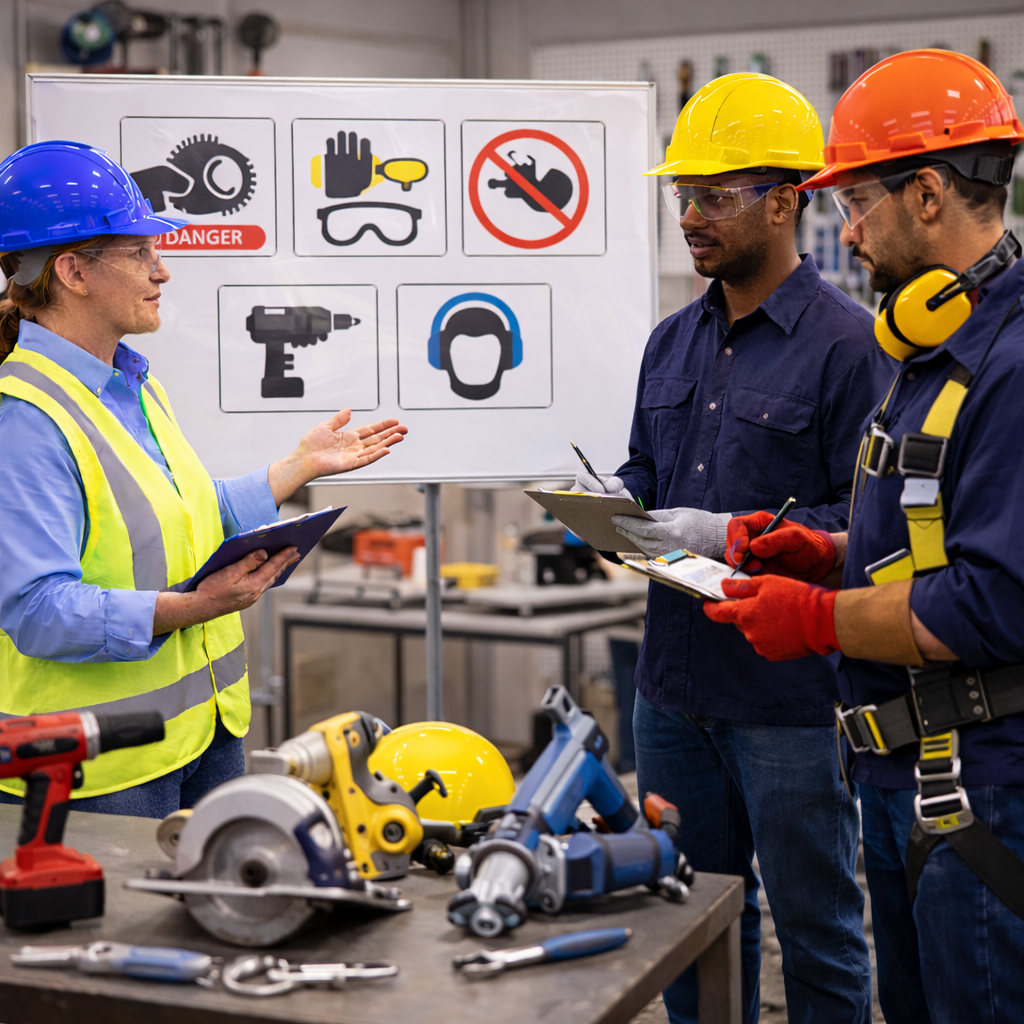
Hand and power tools are used every day—but when they are misused, poorly maintained, or operated without the right precautions, they can lead to serious injuries, equipment damage, and costly downtime. This course helps learners build the knowledge and awareness needed to work more safely, confidently, and responsibly.
Reduce Injury Risk
Learn how to recognize common hazards before they become incidents involving cuts, shock, flying particles, crushing injuries, or unsafe tool operation.
Improve Safe Work Habits
Build practical awareness around inspection, selection, handling, guarding, and safe use of hand tools and portable powered tools.
Support Compliance Awareness
Reinforce safety expectations aligned with OSHA requirements for hand and portable powered tools in general industry settings.
Start with No Prior Knowledge
Designed to be accessible for learners who need a clear, structured introduction to hand and power tool safety.
Why This Course Matters
A moment of inattention, the wrong tool for the task, damaged cords, missing guards, or improper handling can turn routine work into a serious accident. In environments where hand and portable powered tools are part of daily operations, safety awareness is not optional—it is essential.
This training is built to help learners understand the real risks associated with hand and power tools and the precautions needed to control them. From hazard awareness to safer work practices, the course supports stronger day-to-day decision-making in the workplace.
Whether you are onboarding new workers, reinforcing workplace safety standards, or improving general industry compliance awareness, this course provides a practical foundation for safer tool use.
What the Course Covers
Hazard Awareness
Understand the risks linked to improper use, poor maintenance, electrical exposure, and unsafe operating practices.
Tool Safety Basics
Build essential knowledge around hand tools, power tools, safe handling, inspection, and correct use.
Powered Tool Precautions
Explore safety points for electrical, pneumatic, hydraulic, liquid-fueled, and powder-actuated tools.
Machine Guarding & Special Risks
Review machine guards, rotating equipment, abrasive wheels, cords, hoses, switches, and jack safety.
Learning Outcomes
- Identify common hazards associated with hand tools and portable powered tools.
- Recognize the importance of proper tool selection, inspection, and maintenance.
- Understand safe operating practices for hand tools and power tools in general industry settings.
- Apply key precautions for cords, cables, hoses, switches, and electrically powered equipment.
- Describe safe use considerations for pneumatic, hydraulic, liquid-fueled, and powder-actuated tools.
- Explain the role of machine guards and safe practices around rotating equipment and abrasive wheels.
- Improve day-to-day safety awareness to help prevent injury, damage, and unsafe work behavior.
Who This Is For
- Workers in general industry who use hand tools or portable powered tools as part of their role.
- Supervisors and team leaders responsible for maintaining safe work practices.
- Maintenance personnel, technicians, and operators who need stronger tool safety awareness.
- New employees who require a clear introduction to safe tool handling and hazard recognition.
- Organizations looking to reinforce workplace safety culture through practical, accessible training.
Build Safer Habits Before an Incident Happens
When tools are part of the job, safety knowledge should be part of the standard. This course helps learners move beyond routine use and develop the awareness needed to protect themselves, their coworkers, and the workplace every day.
Related topics: machine guarding, machine safety, point of operation, pinch points, moving parts, safeguarding devices, equipment inspection, hazard assessment, energy isolation, lockout tagout, operator safety, maintenance safety