HazCom Training for Employees
Understand Chemical Hazards Faster. Read the Warnings Correctly. Work Safer Every Day.
Hazard communication is one of the most important foundations of chemical safety. When employees understand labels, pictograms, Safety Data Sheets, and safe handling information, they are better prepared to prevent exposure, respond correctly, and protect themselves and others. This course helps learners turn chemical information into practical workplace safety action.
Why This Training Matters
Chemicals are used in countless workplaces, but risks increase quickly when employees do not fully understand what they are handling. A missed warning, misunderstood pictogram, ignored precaution, or failure to check the Safety Data Sheet can lead to exposure, injury, fire, reactivity incidents, or long-term health concerns.
This training helps teams build confidence in reading and applying hazard information so safer decisions can be made before work begins, during use, and when something goes wrong.
What Makes This Course Valuable
Clearer Hazard Recognition
Help learners understand what chemical labels, signal words, pictograms, hazard statements, and precautionary statements are really telling them.
Better Daily Chemical Safety Decisions
Build practical awareness of how to use Safety Data Sheets, recognize exposure risks, and follow safer handling, storage, and emergency-response practices.
Stronger Workplace Compliance and Protection
Support a safer, more informed workforce that understands chemical communication and helps reduce preventable incidents across the workplace.
Course Overview
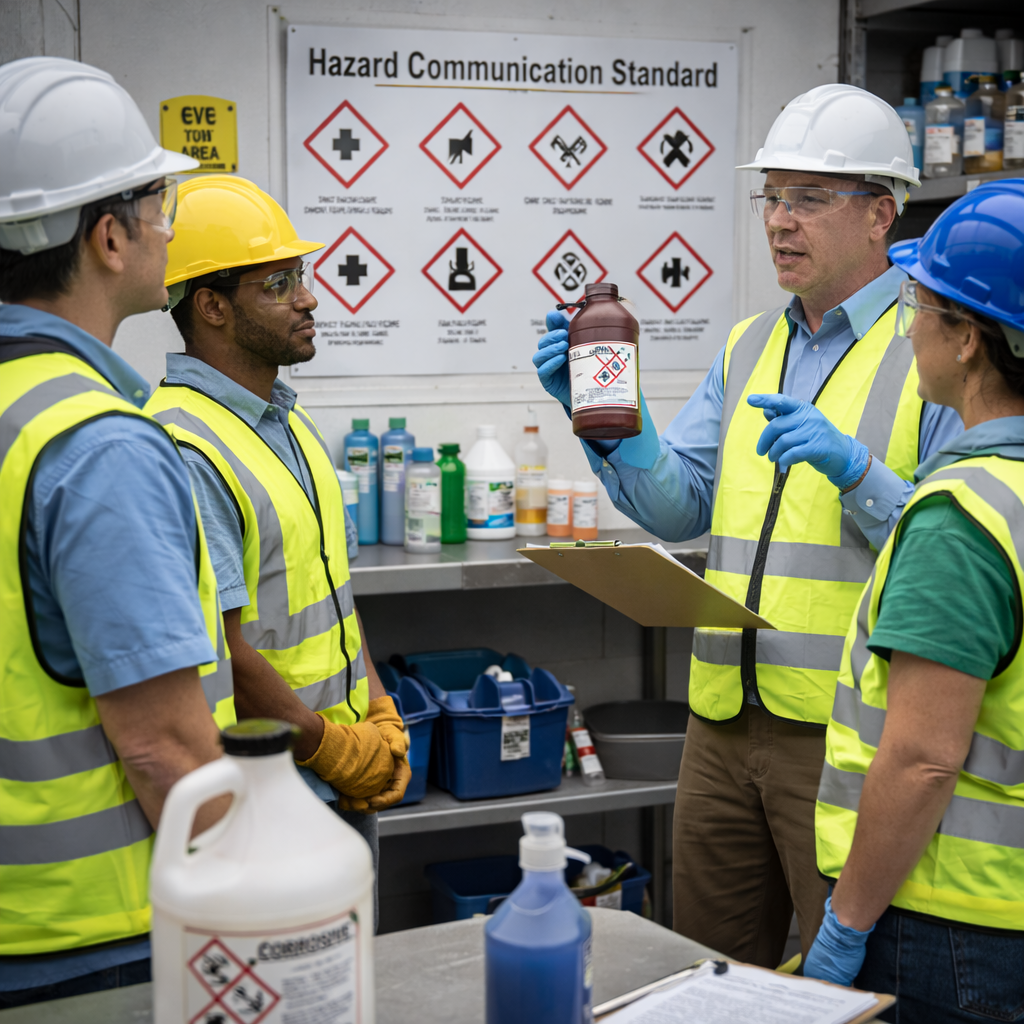
This course provides a practical introduction to Hazard Communication for employees who work with or around hazardous chemicals. It focuses on understanding chemical labels, GHS pictograms, Safety Data Sheets, chemical hazards, and the information employees need in order to work more safely and respond more appropriately to chemical risks.
It is designed for organizations that want stronger chemical-safety awareness and for learners who need a clear, practical foundation in how hazardous chemical information is communicated in the workplace.
Learning Outcomes
By the end of this course, learners should be able to:
- Explain the purpose of Hazard Communication in protecting employees from chemical hazards.
- Recognize the key elements found on hazardous chemical labels, including pictograms, signal words, hazard statements, and precautionary statements.
- Understand the meaning of common GHS pictograms and what types of hazards they represent.
- Identify the purpose of a Safety Data Sheet and understand how it helps employees locate critical hazard and response information.
- Recognize common routes of chemical exposure and why proper handling, storage, and hygiene practices matter.
- Understand the role of workplace procedures, labeling systems, and chemical information access in reducing risk.
- Support safer work practices by checking hazard information before using, moving, storing, or disposing of chemical products.
- Contribute to a stronger safety culture through better awareness, earlier reporting, and more consistent chemical-risk prevention.
Who This Is For
- Employees who work with, near, or around hazardous chemicals in manufacturing, warehousing, maintenance, laboratories, cleaning, construction, healthcare, or industrial environments.
- New starters who need a practical foundation in chemical labels, pictograms, and Safety Data Sheets.
- Supervisors and team leaders responsible for reinforcing safe chemical handling practices across teams.
- Health and safety personnel seeking a strong awareness course for workforce chemical communication training.
- Organizations aiming to improve employee understanding of hazardous substances and strengthen chemical-safety culture.
- Anyone who needs a clearer understanding of how chemical hazard information is communicated and applied in the workplace.
Why Add This Course to Your Safety Program
Chemical hazards are easier to control when employees understand the information in front of them before exposure occurs. Training helps workers interpret labels correctly, use Safety Data Sheets more effectively, and make safer choices during everyday tasks involving hazardous substances.
For employers, that means stronger compliance, better hazard awareness, and fewer preventable chemical incidents. For learners, it means practical knowledge they can apply immediately in real workplace situations where chemical safety depends on understanding the message before the hazard becomes the problem.
Build a More Informed Workforce Through Better Hazard Communication
Safer chemical work starts with understanding the warning signs, knowing where to find the right information, and acting on it with confidence. This course helps teams strengthen those essentials and create a more informed, more protective approach to hazardous chemical safety.
Related topics: hazard communication, chemical labels, safety data sheets, GHS, chemical hazards, employee training, exposure controls, PPE, emergency procedures, hazardous materials, workplace safety, compliance training