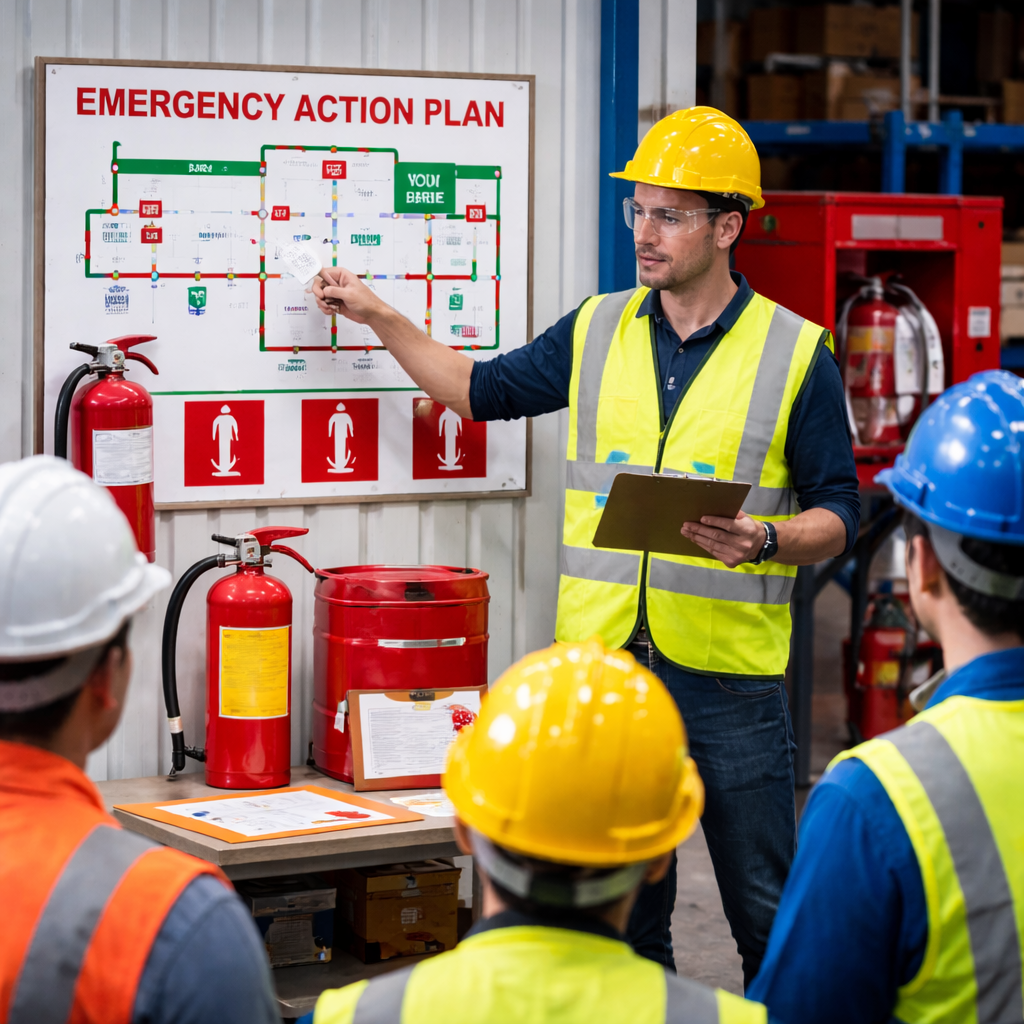
Emergency Action and Fire Prevention Plans Training
Prepare your team to respond faster, evacuate safer, and reduce fire risk before an emergency happens
Emergencies create confusion when people do not know exactly what to do. This course helps learners understand the essentials of emergency action and fire prevention planning so they can respond more confidently, protect others, and support a workplace that is ready before a crisis begins.
Why this course matters
In an emergency, delays, uncertainty, and poor communication can turn a manageable situation into a serious incident. Unclear evacuation routes, missed alarm procedures, poor accountability, and weak fire prevention controls can place people, property, and operations at unnecessary risk.
This training helps organisations move from reactive thinking to proactive preparedness. Learners gain practical awareness of what effective emergency action and fire prevention plans should achieve, how responsibilities are communicated, and why planning ahead is critical to safer outcomes.
🚨
Improve Emergency Readiness
Help learners understand what to do quickly and clearly during workplace emergencies.
🔥
Strengthen Fire Prevention Awareness
Build understanding of major fire hazards, ignition sources, and preventive controls.
🧭
Support Safer Evacuation
Reinforce awareness of reporting, routes, responsibilities, and accountability.
📋
Promote Clear Roles and Planning
Encourage a more organised, consistent, and confident emergency response culture.
Course Overview
Emergency Action and Fire Prevention Plans Training gives learners a practical introduction to the planning principles that help workplaces respond more effectively to emergencies and reduce the likelihood of fire-related incidents.
The course explains the purpose of emergency action planning, including how organisations communicate emergencies, guide evacuation, account for personnel, and assign responsibilities during critical events. It also develops awareness of fire prevention planning by focusing on the workplace conditions and controls that help reduce the chance of a fire starting or spreading.
For employers, this training supports more than basic compliance awareness. It helps create a workforce that understands the value of preparation, recognises the importance of clear procedures, and is better equipped to contribute to safer emergency response and stronger fire prevention practices.
Learning Outcomes
✓ Understand the purpose of emergency action and fire prevention plans in the workplace
✓ Recognise the importance of emergency reporting, alarms, evacuation routes, and accountability procedures
✓ Build awareness of roles and responsibilities during workplace emergencies
✓ Identify common fire hazards, ignition sources, and preventive workplace controls
✓ Understand the importance of housekeeping, waste control, and maintenance in fire prevention
✓ Support safer decision-making through better preparedness and clearer emergency awareness
Who This Is For
This course is especially suitable for:
Employees across general workplaces
Supervisors and team leaders
Safety coordinators
Facilities and operations staff
New hires and refresher learners
Anyone involved in workplace emergency preparedness
It is ideal for organisations that want to improve emergency readiness, strengthen fire prevention awareness, and build a workforce that understands how to act quickly, responsibly, and safely when it matters most.
Prepared teams respond better under pressure
Strong emergency planning is not just about having procedures on paper. It is about helping people understand the plan, recognise hazards early, and act with clarity when every second counts.
Equip your workforce with practical awareness that supports safer evacuation, stronger fire prevention habits, and a more resilient workplace from day one.
Related topics: emergency action plan, emergency preparedness, evacuation procedures, emergency response, fire prevention, workplace drills, alarm systems, severe weather planning, incident reporting, employee roles, crisis planning, workplace safety