Ergonomic Hazards in General Industry Training
Help your workforce reduce strain, prevent avoidable injury, and work smarter in demanding everyday operations
Ergonomic hazards often build slowly, which is why they are so easy to ignore until discomfort becomes lost time, lower productivity, or long-term injury. This course gives learners practical awareness of ergonomic risks in general industry so they can recognise strain factors earlier, support safer work methods, and contribute to healthier, more sustainable performance every day.
Why this course matters
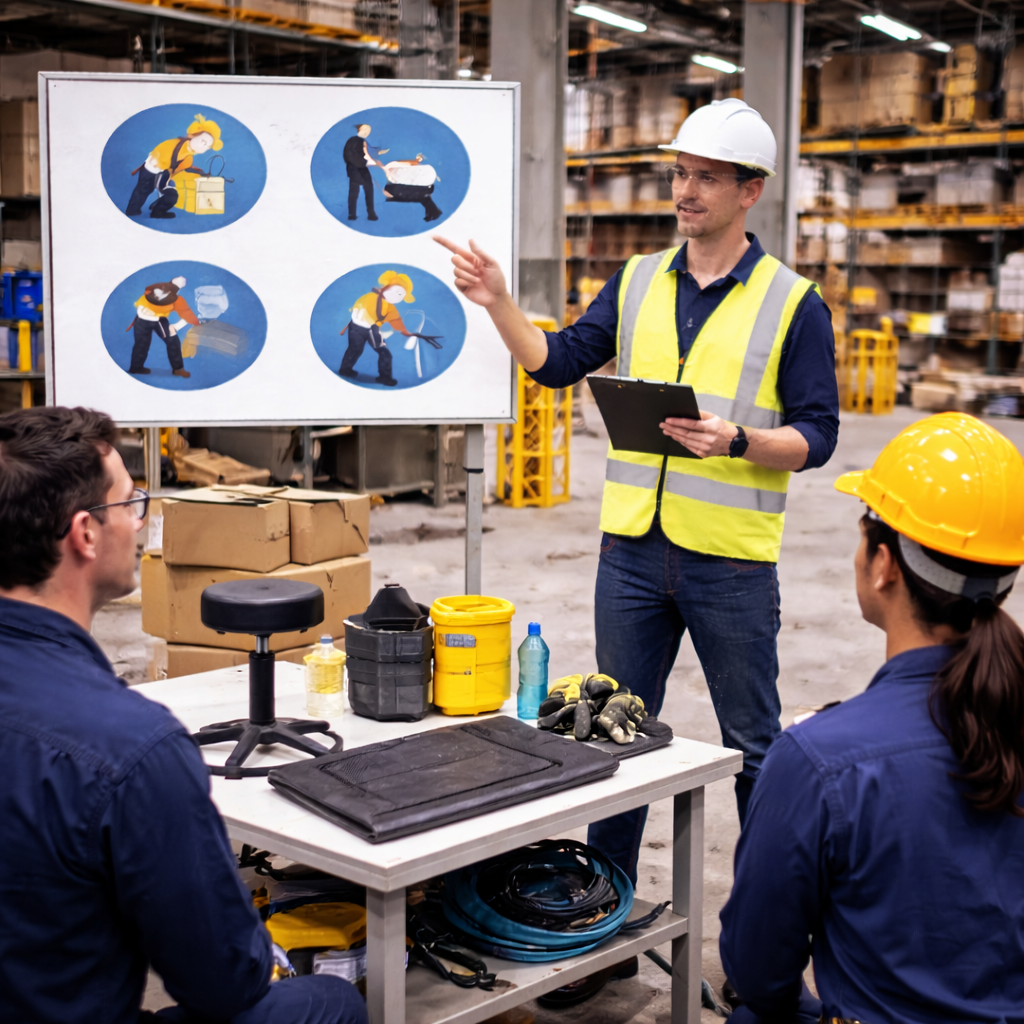
In general industry settings, ergonomic risks can appear in lifting, carrying, reaching, repetitive hand work, awkward postures, tool use, workstation layout, standing for long periods, and physically demanding production routines. When those exposures are repeated day after day, they can affect comfort, performance, attendance, and long-term worker health.
This training helps organisations strengthen awareness of the risk factors behind strain-related problems. Learners gain a clearer understanding of how ergonomic hazards develop, why they are often underestimated, and how better work habits and earlier reporting can support safer, more efficient operations.
🧍
Recognise Ergonomic Risks Earlier
Improve awareness of the physical work demands that can lead to strain, fatigue, and musculoskeletal injury.
🏭
Support Safer Daily Work Methods
Reinforce better habits around lifting, positioning, repetition, work pace, and tool use.
🔁
Reduce Repetitive Strain Exposure
Help learners understand how repetitive motion, force, and awkward posture increase risk over time.
📈
Build a Healthier Work Culture
Encourage earlier reporting, smarter task planning, and more consistent awareness of physical strain.
Course Overview
Ergonomic Hazards in General Industry Training is designed to give learners a practical introduction to the physical work factors that can contribute to discomfort, fatigue, and long-term musculoskeletal problems across general industry environments.
The course focuses on the everyday risk factors that are often accepted as part of the job, including awkward postures, repetitive tasks, forceful effort, manual handling demands, vibration exposure, and workstation or workflow conditions that place unnecessary stress on the body. It helps learners understand how these factors affect performance and wellbeing, and why earlier awareness is essential to prevention.
For employers, this training supports stronger occupational health awareness, better day-to-day work practices, and a more prevention-focused approach to ergonomic risk. It helps teams make smarter decisions before strain becomes injury and before discomfort turns into lost productivity.
Learning Outcomes
✓ Understand what ergonomic hazards are in general industry work environments
✓ Recognise how awkward postures, repetition, force, and manual handling can increase injury risk
✓ Improve awareness of workstation, workflow, and tool-related factors that can contribute to strain
✓ Build understanding of how vibration, prolonged standing, and repetitive tasks can affect workers over time
✓ Recognise the value of safer work methods, task planning, and earlier reporting of discomfort or strain concerns
✓ Support a stronger ergonomics and occupational health culture across teams, shifts, and departments
Who This Is For
This course is especially suitable for:
General industry employees
Manufacturing and production teams
Warehouse and logistics staff
Assembly and packaging workers
Supervisors and team leaders
Anyone exposed to repetitive or physically demanding work tasks
It is ideal for organisations that want to reduce preventable strain-related injuries, improve awareness of ergonomic risk factors, and build a healthier, more sustainable approach to work across general industry operations.
Better ergonomics awareness supports stronger long-term performance
When workers understand how strain develops and what safer work methods look like, they are better able to protect their health, maintain performance, and reduce the kinds of injuries that build quietly over time.
Give your workforce the practical ergonomics awareness to recognise risk earlier, work more efficiently, and help create a safer, healthier, and more productive workplace every day.
Related topics: ergonomics, ergonomic hazards, musculoskeletal injury prevention, workstation setup, manual handling, body mechanics, repetitive strain, safe lifting, risk assessment, employee wellness, workplace safety, occupational health