Occupational Health Awareness • Construction Risk Control • Practical e-Learning
Health Hazards in Construction Training
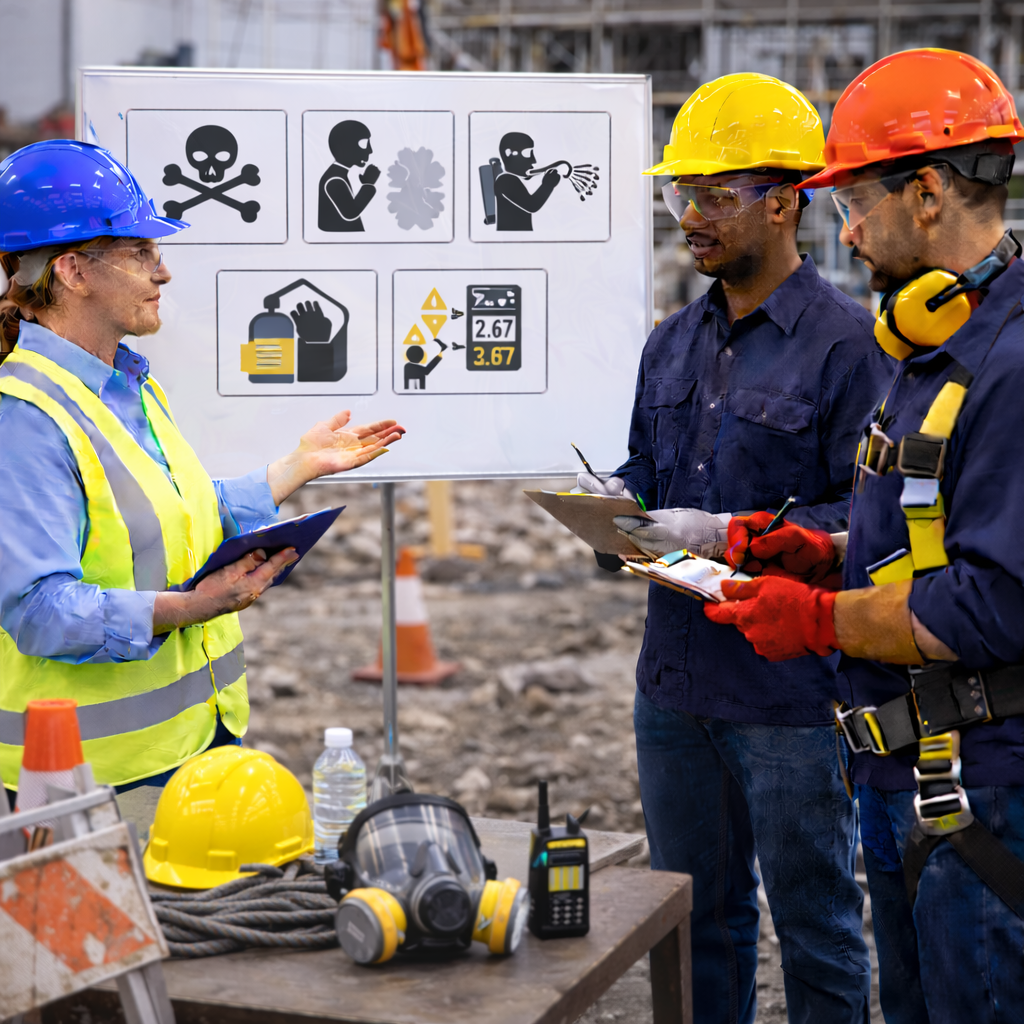
Not every construction hazard is immediate, visible, or dramatic. Some of the most serious risks build up over time—through repeated exposure to dust, chemicals, noise, vibration, manual strain, fumes, and other harmful conditions. This course helps learners recognize health hazards earlier, understand why they matter, and support safer work practices that protect long-term wellbeing as well as day-to-day performance.
Why This Training Matters
In construction, health hazards are often underestimated because their effects may not appear immediately. Yet repeated exposure can lead to serious long-term harm, reduced fitness for work, lost productivity, and avoidable illness. A stronger understanding of occupational health risks helps workers and organizations take action before these exposures turn into permanent problems.
What Learners Gain
This course is designed to strengthen awareness of common health hazards in construction and reinforce the importance of identifying exposures, understanding their effects, and applying safer work practices. Learners gain practical insight into how hazard recognition, exposure control, and everyday decision-making work together to protect health on site.
Why Organizations Take Action
Whether you are onboarding workers, improving occupational health awareness, or reinforcing a more proactive construction safety culture, this training provides a strong foundation for recognizing hidden risks and reducing unnecessary exposure across projects.
What This Course Helps Address
Hazard Recognition Beyond Immediate Injuries
Build awareness of health risks that may not cause instant harm but can seriously affect workers over time if exposures are not identified and controlled.
Dusts, Chemicals, Fumes, and Hazardous Substances
Reinforce awareness of airborne and contact hazards that can affect breathing, skin health, and long-term wellbeing in construction environments.
Noise, Vibration, and Physical Health Stressors
Improve understanding of less-visible health risks linked to work equipment, manual handling, repetitive tasks, and physically demanding site activities.
Exposure Control and Safer Work Practices
Support better decisions around assessment, control measures, safe behavior, and the importance of reducing exposure before health effects develop.
Learning Outcomes
- Identify common health hazards found in construction work environments.
- Recognize how repeated exposure to dusts, chemicals, fumes, noise, vibration, and physical strain can affect worker health.
- Understand why many occupational health issues develop gradually and are often overlooked on construction sites.
- Explain the importance of exposure awareness, hazard assessment, and practical control measures.
- Describe how safer work practices can reduce unnecessary contact with harmful substances and conditions.
- Improve day-to-day decision-making by treating health risks with the same seriousness as immediate safety hazards.
- Support a stronger safety culture by contributing to healthier, more controlled, and more informed construction work environments.
Who This Is For
- Construction workers who need stronger awareness of occupational health risks on site.
- Supervisors, foremen, and team leaders responsible for improving health and safety standards across crews.
- Health and safety personnel supporting exposure awareness, risk control, and safer work practices.
- New hires who need a practical introduction to construction health hazards and their long-term impact.
- Organizations looking to strengthen occupational health awareness and build a more proactive safety culture.
Protect Health Before the Damage Becomes Permanent
The most effective construction health programs do not wait for symptoms to appear. They focus on early recognition, better controls, and smarter everyday choices. This course helps learners understand the hidden side of jobsite risk so they can take action sooner, work more safely, and help create healthier construction environments for everyone on site.
Related topics: construction safety, health hazards, hazard recognition, exposure controls, PPE, silica dust, lead safety, ergonomic hazards, biological hazards, physical hazards, jobsite safety, compliance training