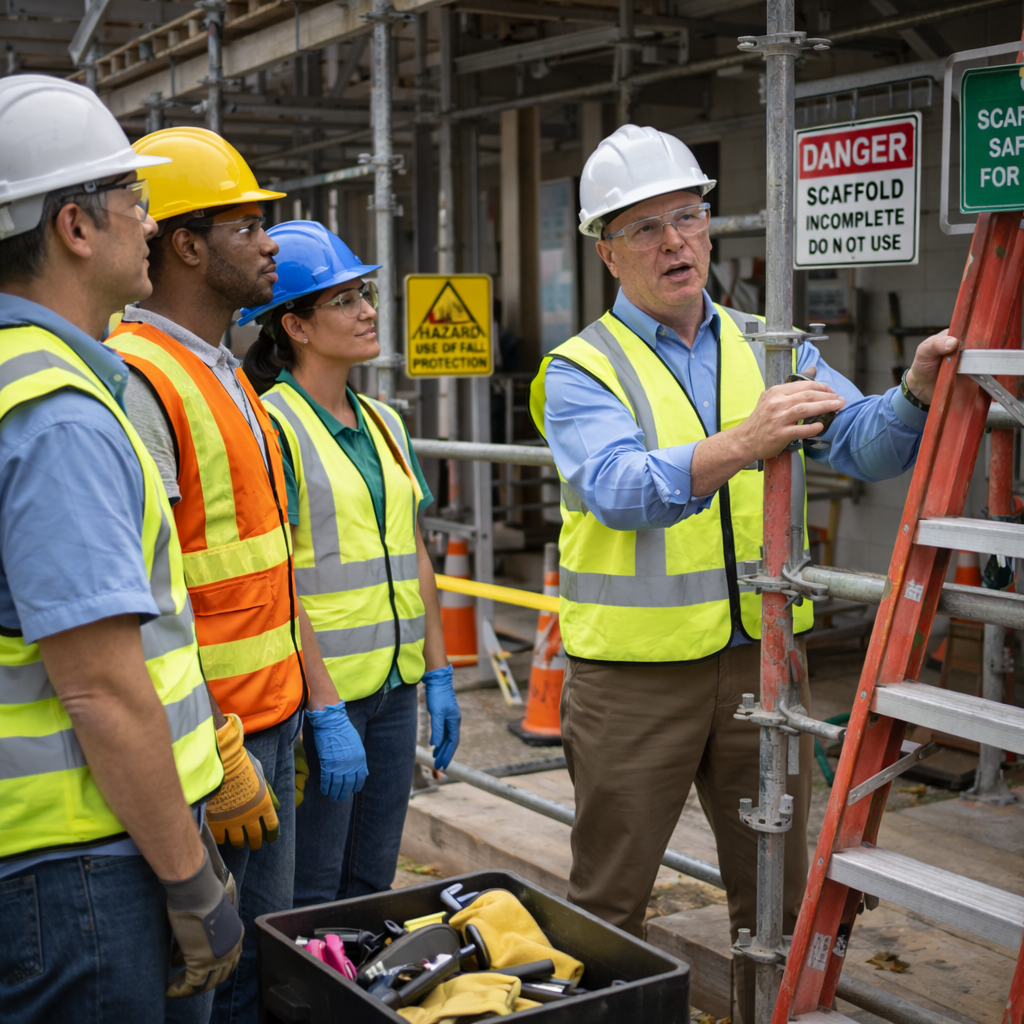
Scaffold Safety Training
Prevent Falls Early. Protect Every Platform. Build Safer Scaffold Use From the Ground Up.
Scaffolds support critical work at height, but when access, inspection, loading, or platform condition are overlooked, the risk can escalate fast. A missing guardrail, unstable base, damaged component, unsafe access route, or overloaded platform can turn routine work into a serious incident. This course helps learners build the practical awareness needed to use scaffolds more safely, reduce fall risk, and support stronger control across everyday operations.
Why This Training Matters
Scaffold incidents rarely happen without warning signs. Poor erection, unsafe access, incomplete decking, missing edge protection, weak inspection routines, bad housekeeping, and unsafe loading practices can all increase the chance of falls, falling objects, and structural instability.
This training helps teams move beyond routine familiarity and develop a safer, more disciplined approach to scaffold use by focusing on hazard recognition, practical controls, and the everyday checks that prevent avoidable incidents.
What Makes This Course Valuable
Stronger Scaffold Hazard Awareness
Understand the conditions that make scaffold work unsafe, including unstable platforms, poor access, missing protection, defective components, and unsafe loading.
Better Daily Safety Decisions
Build practical awareness of inspection, safe access, platform condition, guardrails, housekeeping, and work practices that reduce fall and collapse risk.
More Reliable Work at Height Protection
Support a stronger safety culture where workers report defects sooner, respect scaffold limits, and use work platforms with more confidence and control.
Course Overview
This course provides a practical introduction to scaffold safety in the workplace. It focuses on common scaffold hazards, safe access principles, platform integrity, edge protection, load awareness, inspection routines, and the work practices that help reduce fall risks and structural instability.
It is designed for organizations that want stronger work-at-height awareness and for learners who need a clear, practical foundation in safer scaffold use across construction, maintenance, industrial, and operational environments.
Learning Outcomes
By the end of this course, learners should be able to:
- Explain why scaffold safety is essential in preventing falls, falling objects, and structural failures.
- Recognize common hazards linked to unsafe access, incomplete platforms, missing guardrails, poor condition, and improper loading.
- Understand the importance of using designated safe access routes and avoiding unsafe climbing practices.
- Identify why platform integrity, full decking, edge protection, and housekeeping are critical to safer scaffold use.
- Understand the importance of load limits, stable foundations, and respecting the intended use of the scaffold.
- Recognize the role of competent inspection, defect reporting, and checks after alteration, weather, or other conditions that may affect safety.
- Support safer workplace behavior by reporting unsafe scaffold conditions and stopping work where serious concerns are identified.
- Contribute to a stronger work-at-height safety culture through better awareness, better control, and more consistent scaffold discipline.
Who This Is For
- Workers who use scaffolds during construction, maintenance, inspection, installation, cleaning, or other work-at-height activities.
- Supervisors and team leaders responsible for safe scaffold use, access control, and daily work-at-height practices.
- Health and safety personnel seeking stronger scaffold-awareness training across operational teams.
- Facilities, engineering, industrial, and project personnel who may work from scaffold platforms or around scaffold structures.
- New starters and existing employees who need a practical foundation in scaffold hazards and safe work behavior.
- Organizations aiming to reduce falls, improve inspection awareness, and strengthen safer scaffold practices across the workplace.
Why Add This Course to Your Safety Program
Scaffold risks are easier to control when workers understand them before they step onto the platform. Training helps teams notice defects earlier, follow access rules more consistently, respect loading limits, and use scaffolds with safer habits during everyday work.
For employers, that means fewer avoidable incidents, stronger work-at-height control, and better operational reliability. For learners, it means practical knowledge they can apply immediately in real workplace situations where scaffold safety cannot be left to assumption.
Build Safer Scaffold Use Before a Routine Task Becomes a Serious Fall
Strong scaffold safety starts with awareness, discipline, and the confidence to act early when something is not right. This course helps teams strengthen those essentials and create a more informed, more protective approach to scaffold work across every shift.
Related topics: fall protection, slip trip fall prevention, walking working surfaces, ladder safety, stairway safety, guardrails, personal fall arrest systems, hazard inspection, work at height, scaffolding, incident prevention, workplace safety