Hospital Emergency Room Safety Training
Help your emergency-room teams stay ready, protected, and confident in one of healthcare’s most demanding environments.
In the ER, speed matters, but safety matters just as much. This course is designed to strengthen hazard awareness, reduce preventable incidents, and support safer decisions in high-pressure clinical settings where fast action and strong safety habits must work together.
Why emergency-room safety training matters
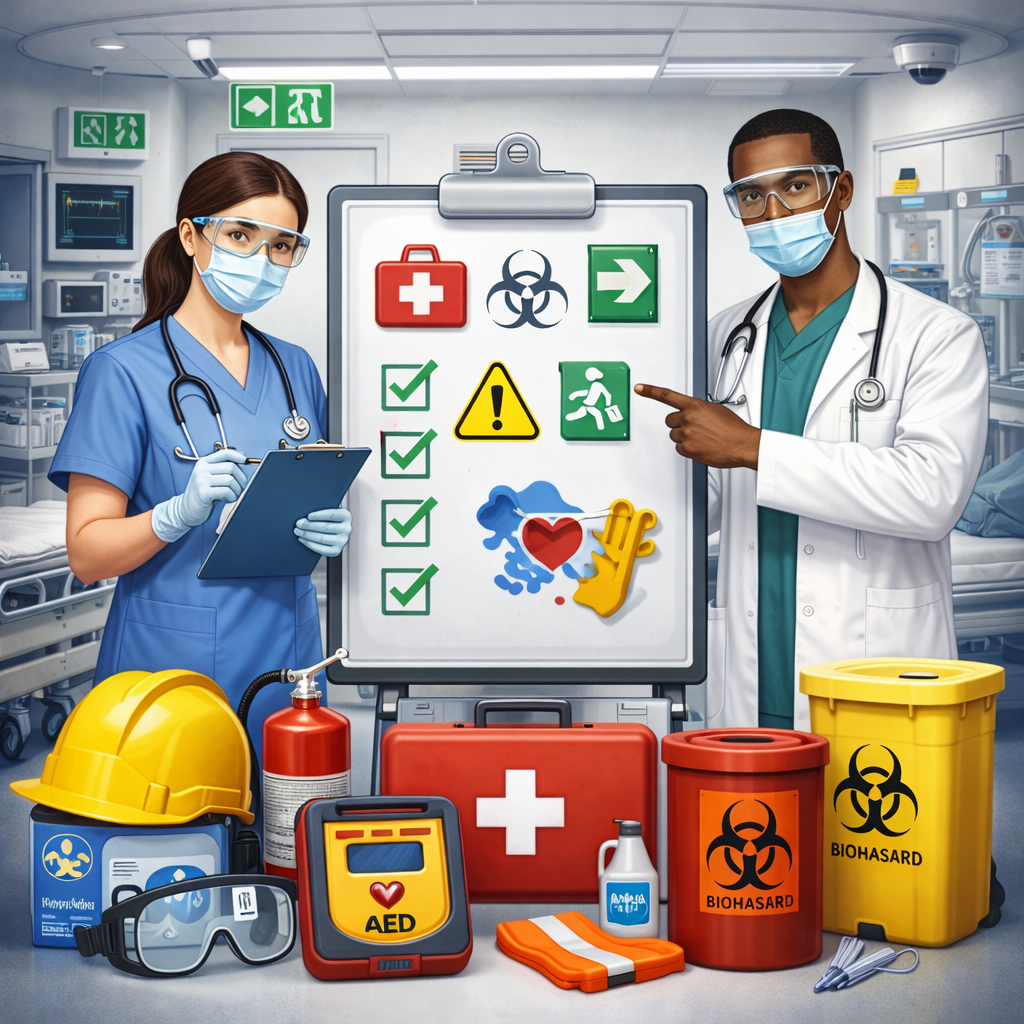
Emergency departments face constant movement, urgent decision-making, unpredictable patient situations, exposure risks, sharps hazards, manual handling challenges, and workplace violence concerns. In this environment, even small breakdowns in safety practice can quickly escalate.
This training helps teams build the awareness and consistency needed to recognize hazards earlier, respond more effectively, and support safer care under pressure.
What this course helps you achieve
Reduce Risk
Recognize common ER hazards and apply practical controls before incidents affect staff, patients, or workflow.
Improve Response
Strengthen awareness, reporting, and decision-making in fast-paced situations where timing is critical.
Support Compliance
Reinforce shared responsibilities, safer routines, and more consistent safety habits across the team.
Build Confidence
Equip staff with practical knowledge they can apply immediately during every shift in the emergency room.
Course Overview
This Hospital Emergency Room Safety Training course provides a practical foundation for safer work in urgent clinical environments. It focuses on hazard recognition, safer task planning, incident prevention, rapid reporting, and the shared role staff and supervisors play in maintaining a safer emergency department.
Learners will develop a stronger understanding of how consistent safety behaviors, clear communication, and simple control measures can help reduce disruptions, improve accountability, and support a safer standard of care in high-pressure settings.
Learning Outcomes
- Understand the importance of safety in emergency-room environments and how it affects staff, patients, and clinical operations.
- Identify common ER hazards, including violence risks, exposure concerns, sharps hazards, patient-handling issues, and environmental risks.
- Apply practical safety controls and safer work habits across day-to-day emergency-room tasks.
- Recognize the value of hazard reporting and near-miss reporting in preventing more serious incidents.
- Understand how workers, supervisors, and management share responsibility for maintaining a safer workplace.
- Use simple planning and checklist-based thinking to reduce surprises and improve consistency under pressure.
- Strengthen confidence in contributing to a stronger safety culture in fast-paced healthcare settings.
Who This Is For
Emergency-room healthcare workers
Clinical support teams
Nurses and frontline care staff
Supervisors and department leaders
EHS and safety personnel supporting medical environments
Anyone involved in emergency-room safety and safe clinical operations
Why this training delivers value
Emergency-room safety is not built on good intentions alone. It depends on shared awareness, repeatable habits, and the ability to act early when risks appear. That is what separates reactive teams from prepared ones.
This course helps turn safety expectations into day-to-day practice, giving teams a stronger foundation for incident prevention, smoother coordination, and safer performance on every shift.
Strengthen safety where urgency never stops
Give your emergency-room team the practical safety knowledge to identify risks sooner, respond with greater confidence, and support a safer, more resilient clinical environment.
Related topics: emergency room safety, healthcare hazards, workplace violence, infection control, sharps safety, patient handling, emergency response, PPE, triage safety, chemical exposure, occupational health, compliance training