Maritime Safety & Health Training
Lead Safety in Shipyards
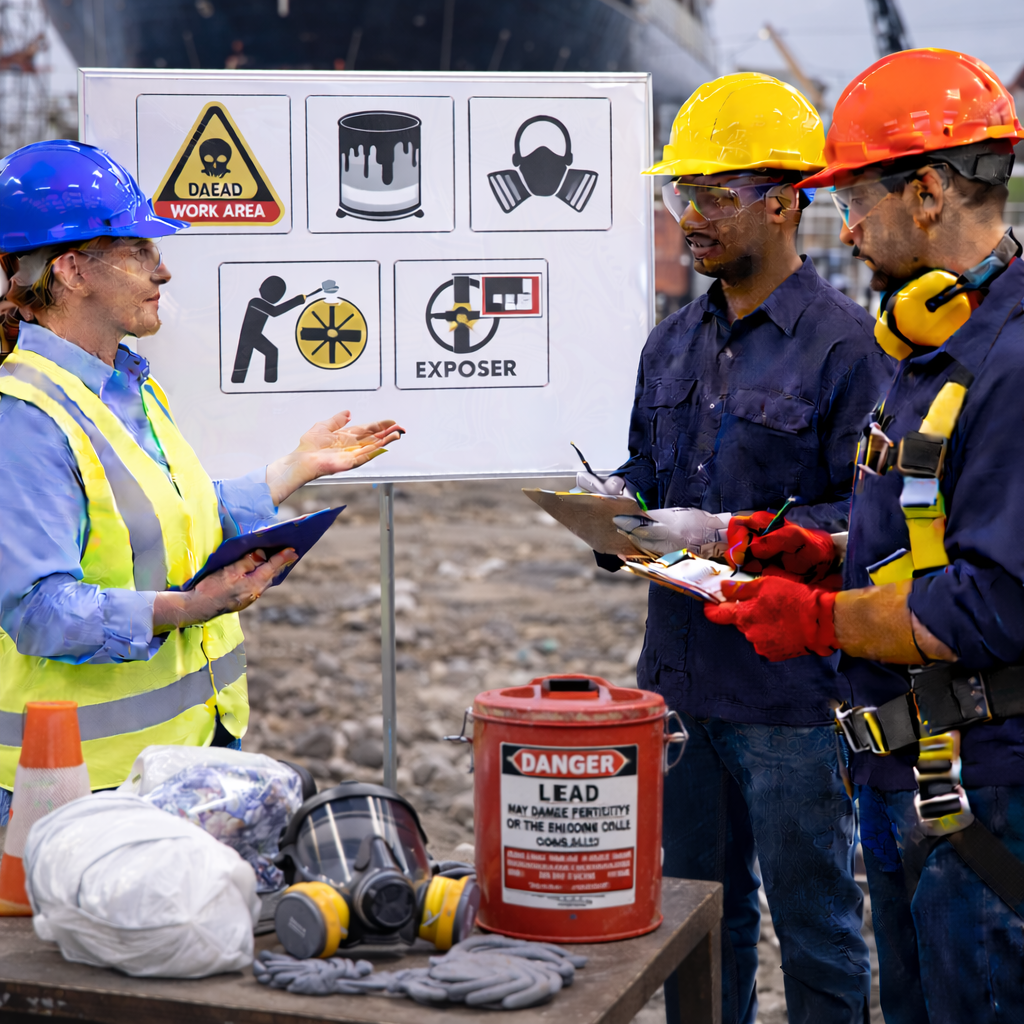
Shipyard operations often involve surface preparation, repair work, coating removal, welding, and maintenance activities where lead hazards may be present.
This course helps workers and supervisors understand the risks, recognize exposure scenarios, and apply safer work practices that support a healthier,
more compliant maritime workplace.
Reduce Exposure Risk
Build awareness of the tasks, materials, and work conditions that can increase lead exposure in shipyard environments.
Support Safer Operations
Strengthen day-to-day decision-making with practical knowledge on hazard recognition, controls, and safer work habits.
Improve Compliance Awareness
Reinforce a compliance-focused mindset that helps protect workers, maintain standards, and support responsible shipyard work.
Why This Training Is Important
In shipyards, lead exposure can happen during coating removal, abrasive blasting, repair operations, surface preparation, maintenance,
and other tasks involving older materials or contaminated dust. In enclosed, below-deck, or high-activity work areas, the risk can increase
quickly when hazards are not recognized early.
That is why lead safety training matters. When workers and supervisors understand where exposure can happen and what preventive measures matter most,
they are better prepared to work safely, reduce health risks, and support a stronger safety culture across the vessel or yard.
This course gives learners a practical foundation in lead hazard awareness for shipyard operations. It is designed to help teams recognize common
exposure scenarios, understand the importance of controls, and take informed action before a routine task becomes a serious health and compliance issue.
What You’ll Explore
- How lead hazards can arise in shipyard operations
- Common exposure routes and high-risk task conditions
- How dust, fumes, residues, and disturbed coatings can affect workers
- The importance of early hazard recognition and exposure awareness
- Safer work practices that help reduce exposure potential
- Basic control measures, housekeeping, hygiene, and PPE awareness
- How shipyard work conditions can affect lead risk management
- The role of training in building a stronger compliance-minded workforce
Learning Outcomes
- Recognize typical lead hazards found in shipyard and marine maintenance activities
- Identify work situations that may increase the likelihood of lead exposure
- Understand how lead exposure can affect worker health and operational safety
- Describe the importance of exposure prevention, housekeeping, and hygiene practices
- Explain the role of PPE and other control measures in reducing risk
- Apply safer work practices that support better protection for workers and surrounding areas
- Develop stronger awareness of compliance responsibilities in lead-related shipyard work
Who This Is For
Shipyard Workers
Ideal for workers involved in repair, maintenance, coating removal, blasting, fabrication, and related marine operations.
Supervisors & Foremen
Valuable for those overseeing crews, planning work, and reinforcing safer procedures in shipyard environments.
Safety Personnel & Employers
Useful for safety officers, managers, and organizations seeking stronger lead hazard awareness and more informed workforce training.
Build a Safer Shipyard from the Start
Lead hazards are easier to control when they are understood early. The right training helps workers recognize risks sooner,
make safer choices on the job, and contribute to a stronger culture of protection across shipyard operations.
Equip your workforce with the knowledge to identify hazards, work more safely, and approach lead-related tasks with greater confidence.
Related topics: welding safety, cutting safety, brazing safety, hot work, fire prevention, ventilation, fumes and gases, eye protection, PPE, compressed gas cylinders, electrical hazards, workplace safety