-
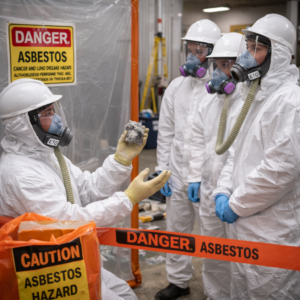 Обучение по осведомлённости об асбесте и контролю рисков, охватывающее риски для здоровья, места возможного нахождения асбеста, его распознавание и сообщение о нём, предотвращение воздействия и безопасные методы работы, позволяющие не нарушать материалы, содержащие асбест (ACM).
 -
石棉认知与管控培训,涵盖健康风险、石棉可能存在的位置、识别与报告、暴露预防,以及避免扰动含石棉材料(ACMs)的安全作业规范。
-
Training in asbestbewustzijn en -beheersing over gezondheidsrisico's, waar asbest kan voorkomen, herkenning en melding, blootstellingspreventie en veilige werkpraktijken om te voorkomen dat asbesthoudende materialen (ACM's) worden verstoord.
-
Formazione sulla consapevolezza e sul controllo dell'amianto che tratta i rischi per la salute, i luoghi in cui l'amianto può essere presente, il riconoscimento e la segnalazione, la prevenzione dell'esposizione e le pratiche di lavoro sicure per evitare di disturbare i materiali contenenti amianto (MCA).
-
Formação em sensibilização e controlo do amianto que aborda os riscos para a saúde, os locais onde o amianto pode estar presente, o reconhecimento e a comunicação, a prevenção da exposição e as práticas de trabalho seguras para evitar perturbar materiais que contenham amianto (MCA).
-
Formación en concienciación y control del amianto que abarca los riesgos para la salud, dónde puede encontrarse el amianto, su identificación y notificación, la prevención de la exposición y las prácticas de trabajo seguras para evitar alterar los MCA.
-
Schulung zu Asbestbewusstsein und Asbestkontrolle mit den Themen Gesundheitsrisiken, mögliche Vorkommen von Asbest, Erkennen und Melden, Vermeidung von Exposition sowie sichere Arbeitspraktiken, um asbesthaltige Materialien (ACM) nicht zu beschädigen oder zu stören.
-
Formation de sensibilisation à l’amiante et de contrôle des risques couvrant les effets sur la santé, les lieux où l’amiante peut être présente, sa reconnaissance et son signalement, la prévention de l’exposition et les pratiques de travail sûres pour éviter de perturber des matériaux contenant de l’amiante (MCA).
-
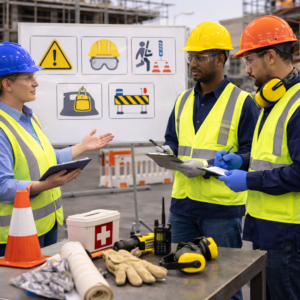 Основы управления безопасностью на строительных объектах: обязанности руководства, разрешительная система, надзор, координация подрядчиков и инспекции для контроля работ повышенной опасности и снижения количества происшествий.
 -
建筑施工安全管理基础:涵盖领导职责、作业许可证、现场监督、承包商协调以及检查工作,以控制高风险作业并减少事故。
-
Basisprincipes van veiligheidsmanagement in de bouw: leiderschapstaken, vergunningen, toezicht, coordinatie van aannemers en inspecties om activiteiten met een hoog risico te beheersen en incidenten te verminderen.
-
Fondamenti della gestione della sicurezza in cantiere: responsabilità della leadership, permessi, supervisione, coordinamento degli appaltatori e ispezioni per controllare le attività ad alto rischio e ridurre gli incidenti.
-
Fundamentos da gestão de segurança na construção: responsabilidades de liderança, permissões, supervisão, coordenação de empreiteiros e inspeções para controlar atividades de alto risco e reduzir incidentes.
-
Fundamentos de la gestión de la seguridad en la construcción: responsabilidades de liderazgo, permisos, supervisión, coordinación de contratistas e inspecciones para controlar actividades de alto riesgo y reducir incidentes.
-
Grundlagen des Sicherheitsmanagements im Bauwesen: Führungsverantwortung, Genehmigungen, Aufsicht, Koordination von Auftragnehmern und Inspektionen zur Kontrolle von Hochrisikoaktivitäten und zur Verringerung von Vorfällen.
-
Fondamentaux de la gestion de la sécurité sur les chantiers de construction : responsabilités de leadership, permis, supervision, coordination des entrepreneurs et inspections pour maîtriser les activités à haut risque et réduire les incidents.
-
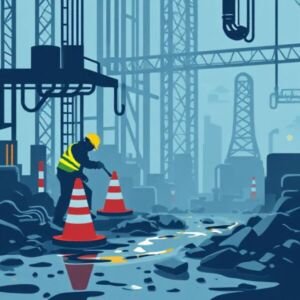 Prevent slips, trips, and falls through housekeeping, surface condition controls, spill response, lighting, footwear, and safe ladder and stair practices supported by simple inspections.
 -
 Process Safety Management training covering core elements, hazard analysis concepts, management of change, operating discipline, mechanical integrity, incident investigation, and emergency planning for major hazard risks.
 -
 Construction safety and health management: planning, risk assessment, site rules, inspections, toolbox talks, incident management, and contractor coordination to control high?risk work.
 -
 Foundational workplace H&S covering duties, hazard spotting, risk controls, safe behaviors, incident reporting, and emergency awareness?helping teams reduce common injuries and build a stronger safety culture.
 -
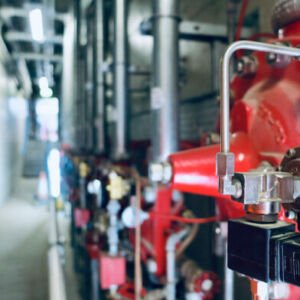 Practical fire safety and emergency response: fire hazards, prevention controls, alarms, evacuation roles, extinguisher awareness, and drill readiness so teams respond quickly and safely during incidents.
 -
 Product safety and compliance for engineers: risk assessment, foreseeable misuse, safety requirements, warnings and instructions, verification/testing, documentation, and lifecycle responsibilities to reduce defects, recalls, and liability.
 -
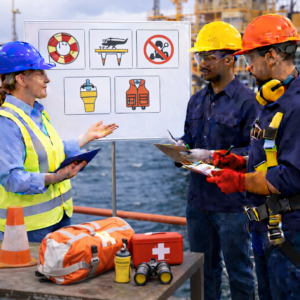 Offshore oil and gas safety essentials covering permit-to-work mindset, hazard awareness, lifting and dropped-object controls, isolation awareness, emergency response, and safe behaviors offshore.
 -
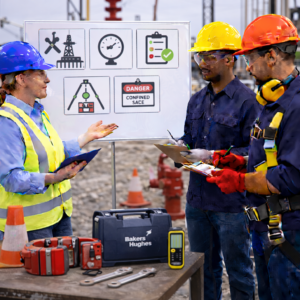 Well inspection safety basics covering site hazards, safe access, equipment awareness, isolation practices, vehicle separation, and reporting to support safer inspection activities.
 -
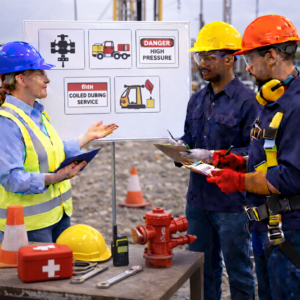 Well site completion and servicing safety covering task hazards, energy and pressure awareness, lifting controls, chemical exposure basics, traffic management, and emergency response.
 -
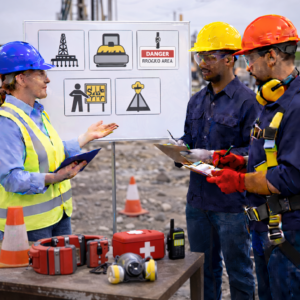 Well site preparation and drilling safety covering high-risk task awareness, equipment hazards, dropped-object prevention, isolation concepts, traffic control, and emergency response basics.
 -
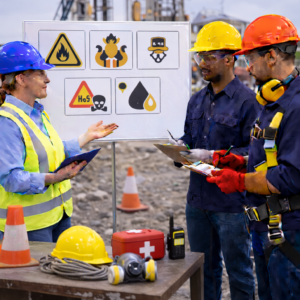 Oil and gas hazard awareness covering common field risks, isolation awareness, lifting and vehicle hazards, exposure controls, and emergency response basics for safer operations.
 -
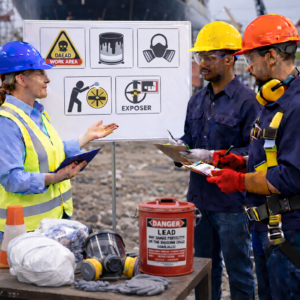 Lead safety (Shipyards) covering health effects, exposure routes, high-risk tasks, engineering controls, hygiene practices, PPE/respiratory awareness, and program elements to reduce exposure and support compliance.
 -
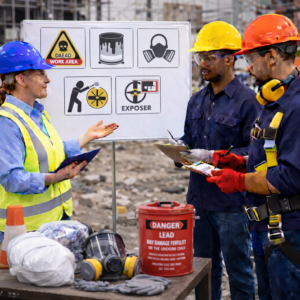 Lead safety (Construction) covering health effects, exposure routes, high-risk tasks, engineering controls, hygiene practices, PPE/respiratory awareness, and program elements to reduce exposure and support compliance.
 -
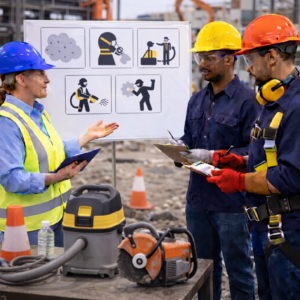 Silica dust control for construction: task-based risk recognition, wet methods and dust extraction, housekeeping, and respiratory protection awareness to reduce respirable crystalline silica exposure.
 -
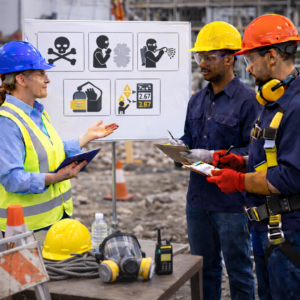 Practical training on Health Hazards in Construction Training covering key hazards, safe work practices, and control measures, with simple checklists and reporting steps to help prevent incidents and improve safety performance.
 -
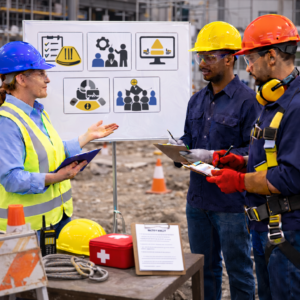 Build a construction safety management system: policy, planning, roles, risk controls, audits, performance metrics, and continuous improvement for consistent site safety outcomes.
 -
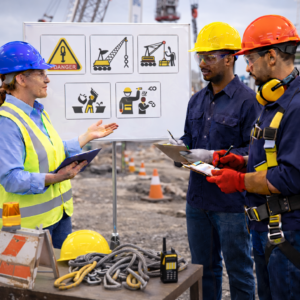 Cranes and derricks safety: planning, setup, inspection, load charts, signaling, and worksite controls to reduce overturning, power-line contact, and dropped-load hazards.
 -
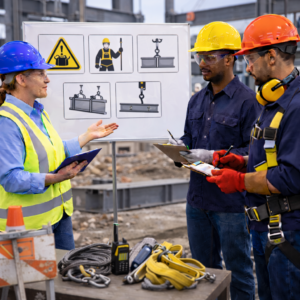 Steel erection safety training covering fall protection, rigging and hoisting awareness, column stability, decking practices, and coordination to control high?risk structural steel activities.
 -
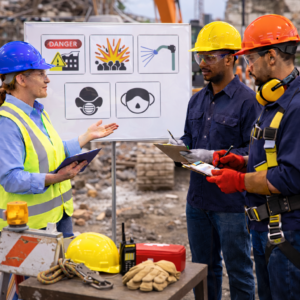 Demolition safety training covering pre-job surveys, structural stability, utility isolation, debris handling, equipment hazards, dust controls, and exclusion zones to reduce collapse and struck?by risks.
 -
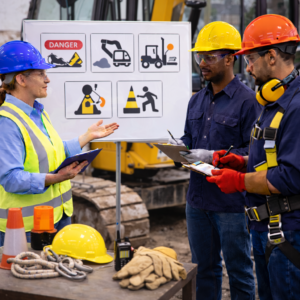 Heavy equipment safety covering pre-use checks, safe operating zones, spotter communication, blind-spot awareness, ground conditions, and maintenance isolation to prevent struck?by and rollover incidents.
 -
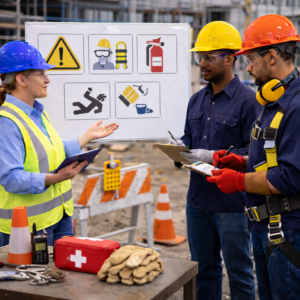 Worksite safety for construction crews covering common site hazards, access control, traffic and pedestrian separation, housekeeping, tool safety, and reporting for safer daily operations.
 -
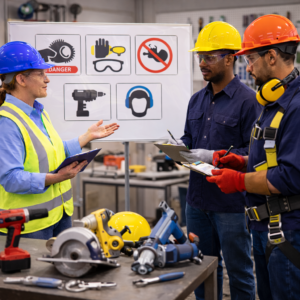 Hand and power tool safety: correct tool selection, inspection, guarding, safe handling, maintenance, and PPE to reduce cuts, flying debris injuries, and shock risks.
 -
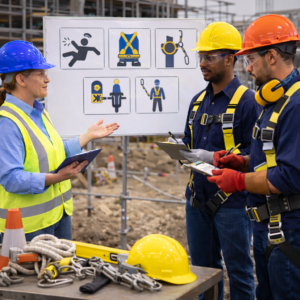 Construction fall protection essentials covering leading fall hazards, guardrails, personal fall arrest basics, ladder/scaffold awareness, and planning and supervision practices to reduce falls from height.
 -
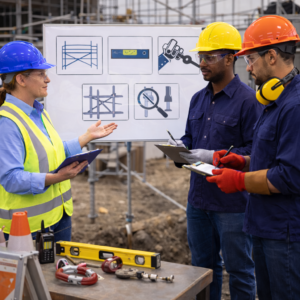 Scaffold erection and inspection: base setup, bracing, access, guardrails, load limits, and daily checks to help competent persons prevent falls and instability.
 -
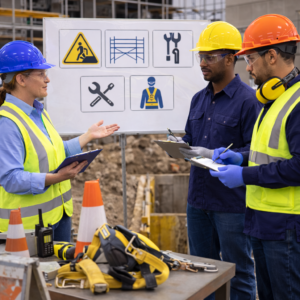 Scaffold program administration: competent person duties, inspection routines, tagging systems, training requirements, and corrective action tracking to reduce falls and scaffold failures.
 -
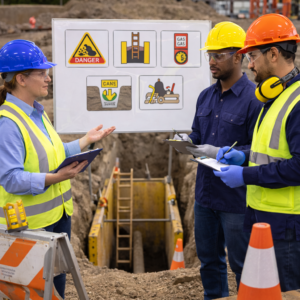 Trenching and excavation safety: soil assessment, protective systems (sloping/shoring/shielding), access/egress, utility hazard controls, inspections, and emergency response to prevent cave?ins.
 -
Construction safety management fundamentals: leadership duties, permits, supervision, contractor coordination, and inspections to control high?risk activities and reduce incidents.
-
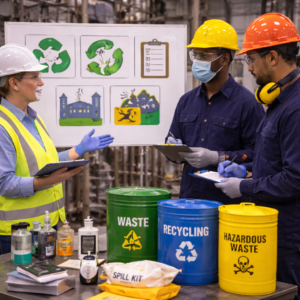 EMS fundamentals covering aspects and impacts, requirements, objectives, operational controls, audits, and continual improvement to manage environmental risk and performance.
 -
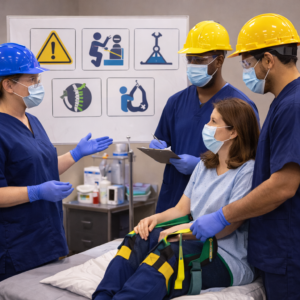 Safe patient handling fundamentals covering risk assessment, transfer aids, teamwork, communication, and injury prevention strategies to reduce caregiver strain and improve patient safety.
 -
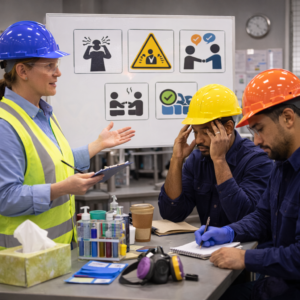 Workplace stress risk management covering psychosocial hazards, workload and role clarity, supportive supervision, practical interventions, and monitoring to protect wellbeing at work.
 -
 Safety management fundamentals covering policy, planning, hazard/risk controls, training, inspections, incident learning, and continuous improvement for a practical safety program.
 -
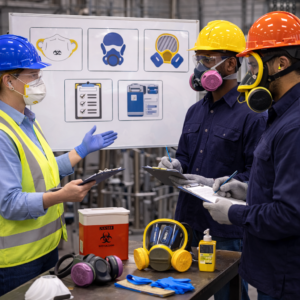 Respiratory protection program essentials: hazard evaluation, respirator selection, fit testing and maintenance basics, training requirements, and program checks to ensure protection against airborne exposures.