Sharps Safety Training
Prevent Sharps Injuries Early. Protect Staff Better. Build Safer Clinical Practice Every Day.
Sharps injuries can happen in seconds, but their consequences can last far longer. From needlesticks and cuts to exposure to bloodborne pathogens, unsafe sharps handling places staff, patients, and organizations at unnecessary risk. This course helps learners understand the hazards, apply safer working practices, and strengthen everyday prevention before an incident occurs.
Why This Training Matters
Sharps injuries are not only painful and disruptive. They can also lead to stress, anxiety, exposure investigations, treatment requirements, and avoidable health risks. In busy healthcare and care settings, even routine procedures can become unsafe when disposal practices, device handling, housekeeping, or communication break down.
This training helps teams move beyond basic caution and develop a more practical, prevention-focused approach to handling sharps safely across everyday work.
What Makes This Course Valuable
Stronger Sharps Hazard Awareness
Understand where sharps injuries happen, why they occur, and what routine actions most often increase risk.
Safer Daily Handling Practices
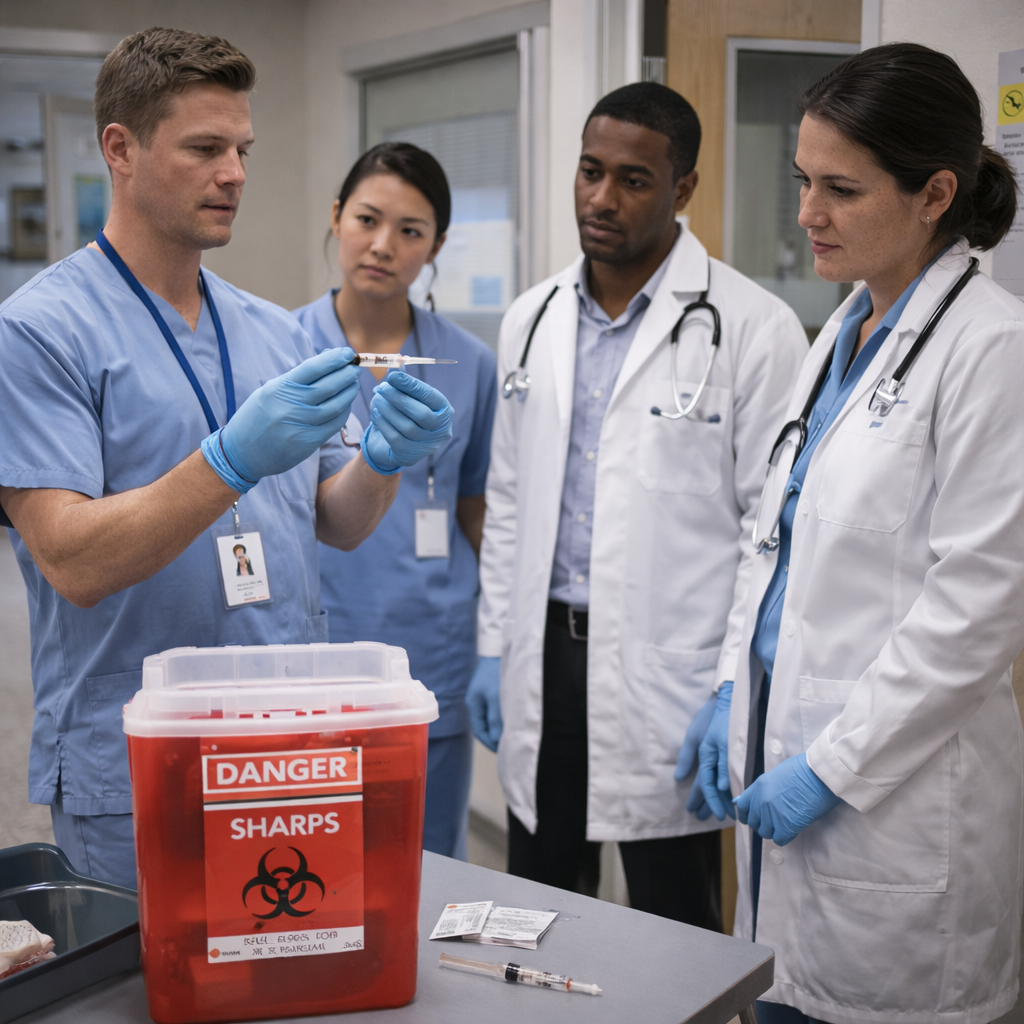
Build practical awareness of safe use, passing, disposal, reporting, and post-incident response around needles and other sharps.
Better Protection for Staff and Patients
Support a safer care environment by reducing preventable injuries, improving reporting, and reinforcing good clinical discipline.
Course Overview
This course provides a practical introduction to sharps safety in healthcare and related environments. It focuses on the key risks linked to needles and other sharp instruments, the work practices that help reduce injury, and the importance of safe disposal, safer devices, reporting, and early response following an exposure incident.
It is designed for organizations that want stronger exposure prevention and for learners who need a clear understanding of how to handle sharps more safely in real workplace situations.
Learning Outcomes
By the end of this course, learners should be able to:
- Explain why sharps safety is essential in protecting workers, patients, and workplace operations.
- Recognize common causes of sharps injuries during use, passing, disposal, cleanup, and handling of contaminated items.
- Understand the importance of safer devices, safe systems of work, and good disposal practices in reducing injury risk.
- Identify why overfilled containers, poor handling technique, and unsafe work habits increase the likelihood of needlestick and sharps incidents.
- Describe practical controls that help reduce exposure, including proper disposal, suitable equipment, and good housekeeping.
- Understand the importance of reporting sharps injuries promptly and following workplace response procedures.
- Recognize the wider health and emotional impact that sharps injuries can have on affected workers.
- Contribute to a stronger safety culture through more consistent sharps awareness, safer behavior, and earlier action when hazards are identified.
Who This Is For
- Healthcare workers who use, handle, dispose of, or may be exposed to needles and other sharps during daily work.
- Nurses, clinicians, dental staff, laboratory personnel, and support teams working in environments where sharps are present.
- Housekeeping, waste-handling, and decontamination staff who may encounter used or improperly discarded sharps.
- Supervisors and managers responsible for exposure prevention, incident response, and safer clinical work practices.
- Health and safety personnel seeking stronger sharps-awareness training for teams and departments.
- Organizations aiming to reduce needlestick injuries, strengthen compliance, and improve overall clinical safety culture.
Why Add This Course to Your Safety Program
Sharps risks are easier to control when teams understand them before an injury occurs. Training helps staff handle devices more safely, dispose of them correctly, report concerns earlier, and respond more effectively if an incident happens.
For employers, that means better prevention, fewer avoidable injuries, and stronger exposure-control practices. For learners, it means practical knowledge they can apply immediately to protect themselves and others in high-risk environments.
Build Safer Sharps Practice Before an Injury Happens
Strong sharps safety starts with awareness, discipline, and the confidence to act correctly every time. This course helps teams strengthen those essentials and create safer, more reliable working environments where preventable sharps injuries are far less likely.
Related topics: sharps safety, needlestick prevention, bloodborne pathogens, engineering controls, safe disposal, PPE, exposure response, healthcare safety, infection control, employee training, compliance training, occupational health