
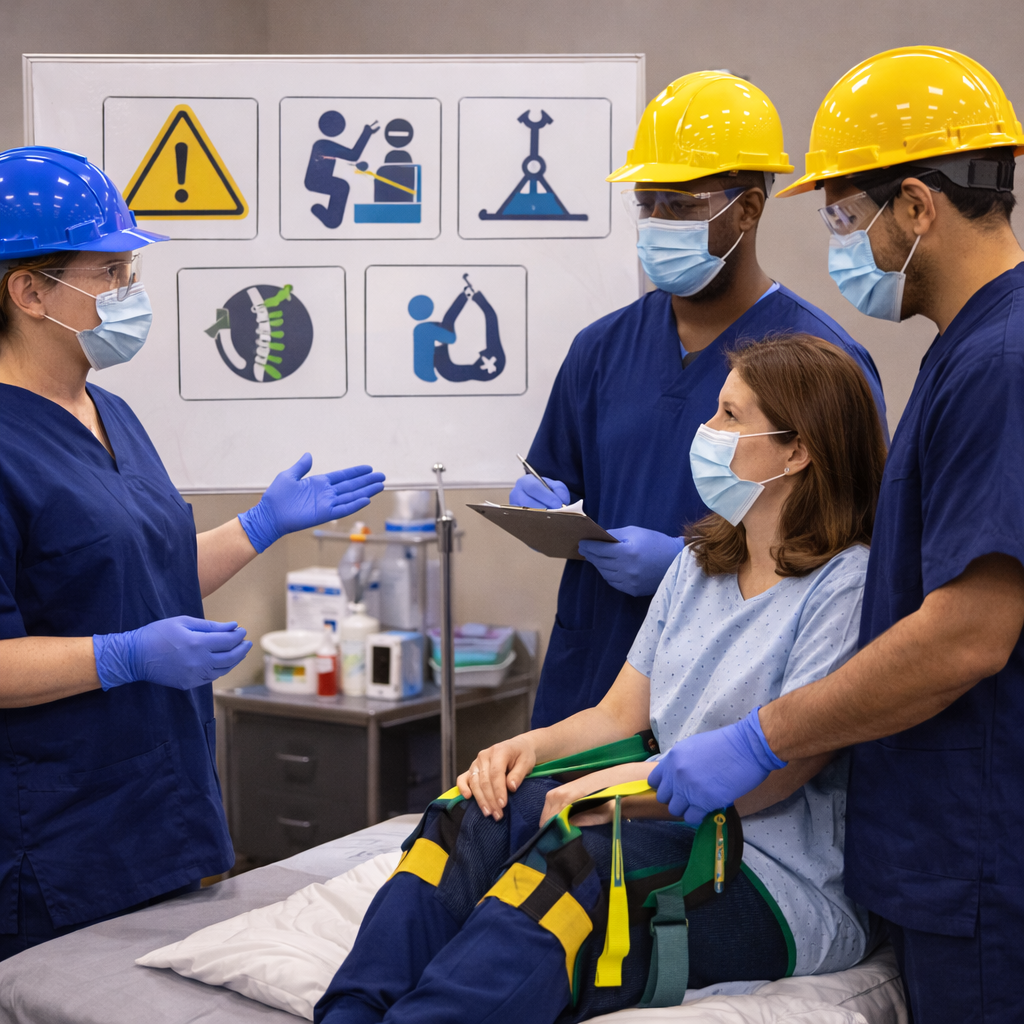
Safe Patient Handling Fundamentals
Description
Protect caregivers, support patients, and build safer handling practices from the ground up.
Patient handling tasks can place enormous physical strain on healthcare workers and unnecessary risk on patients when the right techniques, equipment, and systems are not in place. This course gives learners a practical foundation in safe patient handling so they can help reduce injury risk, improve confidence in patient movement, and support safer care environments.
Why this course matters
Lifting, repositioning, transferring, and mobilizing patients are everyday tasks in many healthcare settings, yet they are also major sources of strain and injury when handled improperly. Without a safe patient handling approach, organizations may face increased musculoskeletal injuries, reduced staff confidence, inconsistent practices, and preventable risks to patient comfort and safety.
Safe Patient Handling Fundamentals is designed to help close that gap. It introduces the essential principles behind safer patient movement and gives learners a clearer understanding of how planning, equipment awareness, teamwork, and proper handling practices contribute to a safer workplace for both staff and patients.
Support safer care delivery
Learn the foundations of patient handling that help improve safety, comfort, and consistency in care settings.
Reduce injury risk
Build awareness of how safer handling methods and equipment use can help reduce strain and prevent injuries.
Strengthen teamwork and confidence
Understand the role of communication, planning, and coordination in safe patient movement and mobility support.
Course Overview
This course introduces the key principles behind safe patient handling in healthcare and care-support settings. Learners explore how safe handling practices help protect workers from physical strain while also supporting safer, more comfortable patient movement. The course builds practical awareness of handling risks, mobility considerations, teamwork, equipment use, and the importance of organized patient handling processes.
Whether you are responsible for direct patient care, supervision, safety oversight, or staff support, this training helps connect safe patient handling principles to real workplace practice.
Patient Mobility Support
Transfer & Repositioning
Equipment Awareness
Team Communication
Safer Care Practices
Learning Outcomes
- Explain the purpose and importance of safe patient handling in protecting both healthcare workers and patients.
- Recognize common patient handling tasks that may create strain, injury risk, or unsafe movement conditions.
- Understand the role of planning, communication, and teamwork in safe patient handling activities.
- Identify how assistive devices and handling equipment support safer transfers, repositioning, and mobility tasks.
- Strengthen awareness of body mechanics, patient needs, and environmental factors that influence safer handling decisions.
- Support more consistent handling practices that help reduce physical stress and improve care quality.
- Contribute more confidently to safe patient handling conversations, procedures, and day-to-day care activities.
Who This Is For
- Nurses, nursing assistants, caregivers, and other healthcare workers involved in patient movement and mobility support.
- Supervisors and managers responsible for safer patient handling practices across care teams.
- Health and safety professionals supporting ergonomics, injury prevention, or patient handling initiatives.
- EHS coordinators, occupational health staff, and training personnel working in healthcare settings.
- Healthcare organizations aiming to improve consistency, worker protection, and patient movement safety.
- Anyone who needs a practical introduction to safe patient handling fundamentals.
What makes this training valuable
Focuses on the core principles that support safer handling decisions in real healthcare environments.
Connects patient movement, staff safety, and equipment awareness to everyday care responsibilities.
Builds confidence to support safer teamwork, better habits, and more consistent patient handling practices.
Take a more proactive approach to patient handling safety
Safe patient handling is more than a manual task. It is a vital part of protecting people, supporting quality care, and reducing preventable strain and injury across healthcare settings.
Build the knowledge needed to support safer movement practices, stronger worker protection, and better outcomes for both staff and patients.