Oil & Gas Safety Training
Well Site Preparation and Drilling Safety Training
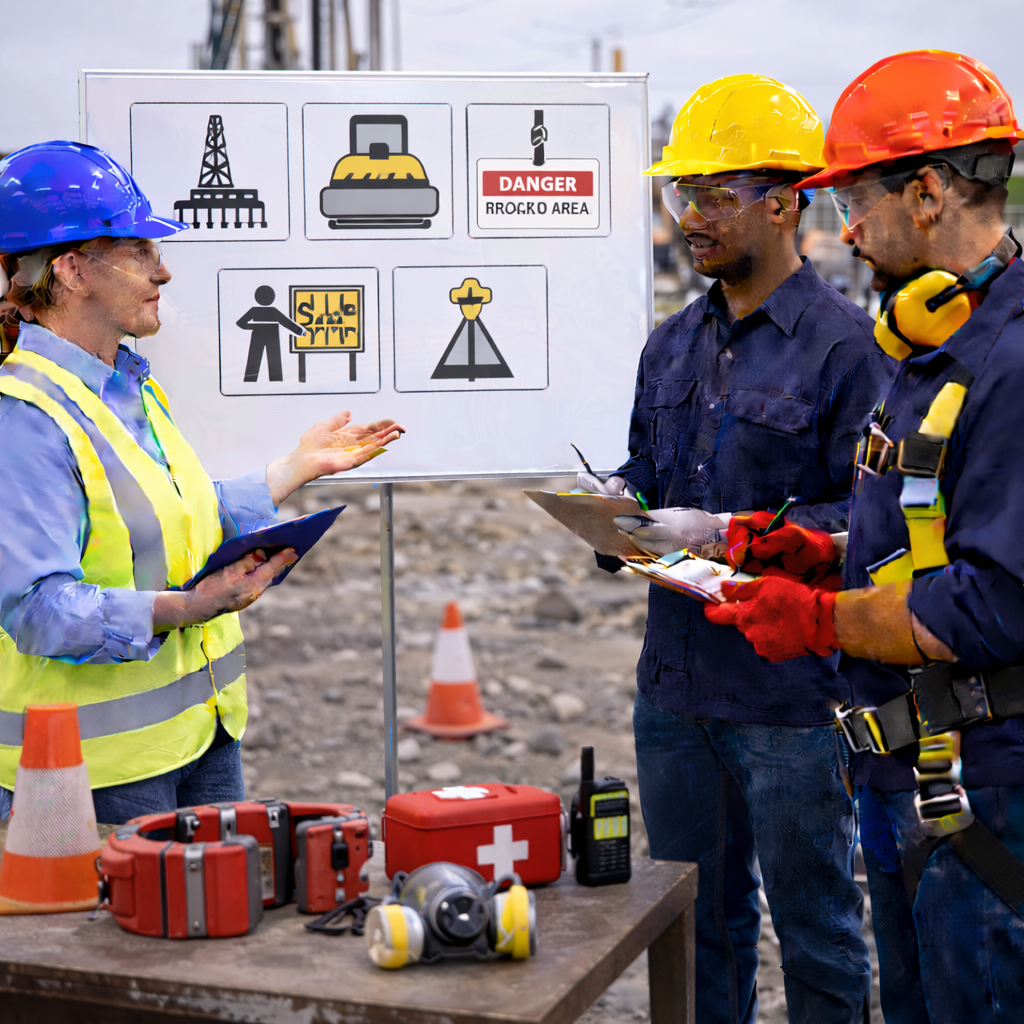
Before drilling begins, the groundwork for safety is already being set. From site preparation and equipment movement to rig activities and day-to-day operations, hazards can escalate quickly when risks are not recognized early. This course helps learners build the awareness needed to identify common dangers, support safer work practices, and contribute to better-controlled well site operations.
Reduce Risk Early
Understand the hazards that can develop during site preparation, rig setup, drilling activity, and general well site operations.
Improve Field Awareness
Strengthen awareness of moving equipment, pressure-related hazards, worksite conditions, and exposure risks that can affect safety performance.
Support Safer Operations
Help create a more safety-focused work environment where teams are better prepared to recognize hazards and act with confidence.
Why This Course Matters
Well site preparation and drilling activities involve a wide range of hazards, often across changing work conditions. Crews may encounter heavy equipment movement, excavation and leveling risks, rig hazards, line-of-fire exposures, slips and falls, hazardous energy, and environmental stressors—all within a fast-paced operational setting.
Without strong hazard awareness, routine tasks can quickly become serious incidents. That is why training matters. When workers and supervisors understand what to watch for, how risks build, and where safer work practices make the biggest difference, the entire site benefits from better planning, safer execution, and stronger day-to-day decision-making.
This course provides a practical introduction to well site preparation and drilling safety. It is designed to help learners recognize common hazards, understand the importance of controls and safe behavior, and build the awareness needed to support safer operations from the ground up.
What You’ll Explore
- Common hazards during well site preparation and drilling activities
- Site conditions that can increase the risk of incidents or loss of control
- Equipment movement, rig hazards, and line-of-fire awareness
- Exposure-related risks involving noise, dust, chemicals, gases, and environmental conditions
- Safer work practices that support hazard prevention and task awareness
- The role of housekeeping, communication, and work planning
- Awareness of manual handling, lifting, and physical strain factors
- How stronger hazard recognition supports a safer and more responsible well site
Learning Outcomes
- Recognize common hazards associated with well site preparation and drilling work
- Identify work conditions and activities that may increase the likelihood of injuries or incidents
- Understand the importance of early hazard recognition before and during site operations
- Describe how equipment, vehicle movement, and rig activity can create serious safety risks
- Recognize common exposure hazards and the need for protective measures
- Explain how safer work practices, communication, and planning help reduce operational risk
- Apply stronger awareness to support safer decisions in changing worksite conditions
- Contribute to a more safety-conscious culture across site preparation and drilling activities
Who This Is For
Field Workers
Suitable for workers involved in site preparation, drilling support, equipment handling, maintenance, and general well site activities.
Supervisors & Team Leads
Valuable for those overseeing crews, coordinating work, and reinforcing safer practices in dynamic drilling environments.
Contractors & Safety Personnel
Ideal for contractors, safety officers, and employers who want stronger hazard awareness and more consistent risk recognition across the site.
Stronger Safety Starts Before the Drill Turns
The safest well sites are built on awareness, preparation, and the ability to spot risk before it grows. With the right training, teams can approach site preparation and drilling work with better judgment, sharper hazard recognition, and a stronger commitment to safe performance.
Equip your workforce with the knowledge to identify hazards sooner, work more confidently, and support safer well site operations every step of the way.
Related topics: excavation safety, trenching safety, cave-in protection, protective systems, soil classification, competent person, access and egress, underground utilities, atmospheric hazards, inspections, construction safety, compliance training