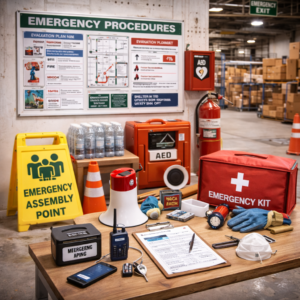
Emergency Preparedness & Workplace Safety
Emergency Action Plan (EAP) Development
In an emergency, confusion costs time—and time can cost lives. A well-developed Emergency Action Plan helps teams respond faster, evacuate more safely, communicate more clearly, and reduce disruption when every second matters. This course helps learners understand how to build a stronger, more practical EAP that supports readiness, coordination, and confidence across the workplace.
Why this course matters
Emergencies rarely leave time for improvisation. Without a clear plan, workers may not know how to report an incident, where to go, who is in charge, or what actions must happen first. That uncertainty can turn a manageable situation into a serious event.
This training is designed to help organizations move from reactive response to structured preparedness. By understanding the essential elements of an effective Emergency Action Plan, learners can support safer evacuations, better communication, stronger accountability, and more reliable emergency coordination.
What you will gain
📘
A clearer EAP structure
Understand the core components that make an Emergency Action Plan easier to develop, communicate, and maintain.
🚨
Better emergency coordination
Learn how reporting, alarms, evacuation procedures, and assigned responsibilities work together during critical events.
✅
Stronger readiness and confidence
Build confidence in supporting a more organized response system that protects people and improves workplace preparedness.
Course overview
Emergency Action Plan (EAP) Development is designed for professionals who need to create, improve, review, or support emergency response planning in the workplace. The course focuses on the practical framework of an effective EAP, helping learners understand how emergency procedures, communication methods, evacuation planning, assigned duties, and ongoing review all contribute to safer outcomes.
Whether you are building an emergency plan from the ground up or strengthening an existing one, this training supports a more structured, site-focused, and prevention-minded approach to workplace emergency preparedness.
Learning Outcomes
- Understand the purpose of an Emergency Action Plan and how it supports safer workplace response during emergencies.
- Recognize the key elements that should be addressed when developing a practical and organized EAP.
- Improve awareness of emergency reporting procedures, evacuation planning, assigned roles, and employee accountability.
- Identify common planning gaps that can weaken emergency response, such as unclear responsibilities, weak communication, or incomplete procedures.
- Support stronger emergency preparedness through clearer documentation, coordination, and employee understanding.
- Strengthen your ability to review and improve emergency planning so it remains useful as workplace conditions or responsibilities change.
- Contribute to a safer and more confident workplace culture by helping make emergency response more structured, practical, and effective.
Who This Is For
Safety Officers & EHS Professionals
Ideal for professionals responsible for developing, reviewing, or improving workplace emergency preparedness systems.
Supervisors, Managers & Team Leaders
Useful for those who oversee people, coordinate response activities, and need stronger control over emergency planning and communication.
Operations, HR & Compliance Support Staff
A strong fit for anyone involved in emergency coordination, employee communication, business preparedness, training support, or procedural oversight.
Build an emergency plan people can actually use when it matters most
The value of an Emergency Action Plan is not in having a document alone. It is in giving people the clarity, direction, and confidence they need to respond quickly and safely under pressure.
This course helps learners strengthen that capability so they can support better preparedness, clearer responsibilities, and more effective emergency response across the organization.
Related topics: emergency action plan, emergency preparedness, evacuation procedures, emergency response, fire prevention, workplace drills, alarm systems, severe weather planning, incident reporting, employee roles, crisis planning, workplace safety