Fire Safety & Prevention Planning
Fire Prevention Plan Development & Implementation
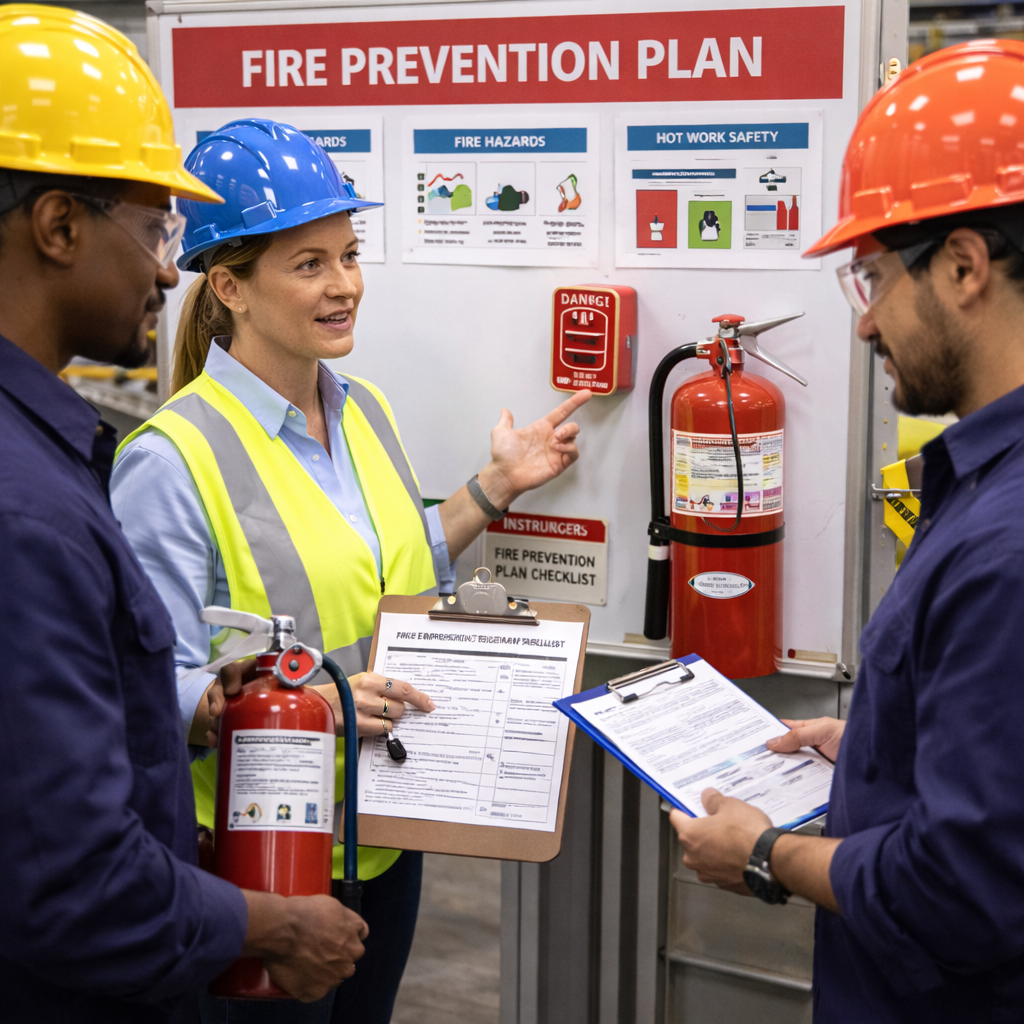
Fire risks do not start when smoke appears. They start earlier—with overlooked hazards, poor housekeeping, uncontrolled ignition sources, and weak prevention systems. This course helps learners understand how to develop and implement a stronger Fire Prevention Plan so the workplace is better prepared to reduce fire risk, protect people, and support safer day-to-day operations.
Why this course matters
A fire prevention plan is not just a document for compliance. It is a practical system for identifying major fire hazards, controlling fuel sources, reducing ignition risks, and supporting safer work practices before a fire ever begins.
When prevention measures are weak or inconsistently applied, the consequences can be severe—injury, operational disruption, property damage, and avoidable loss. This training is designed to help learners build a more organized, practical, and prevention-focused approach to fire safety planning and implementation.
What you will gain
🔥
A stronger prevention framework
Understand the core elements of a Fire Prevention Plan and how they work together to reduce workplace fire risk.
⚠️
Better hazard and ignition control
Improve your ability to recognize fire hazards, fuel sources, waste accumulation, and conditions that can contribute to ignition or spread.
✅
Greater implementation confidence
Learn how clearer responsibilities, maintenance practices, and employee awareness can make a fire prevention plan more effective in real operations.
Course overview
Fire Prevention Plan Development & Implementation is designed for professionals who need to create, improve, manage, or support a workplace fire prevention system. The course focuses on the practical side of prevention planning—helping learners understand how hazards are identified, how controls are organized, and how responsibilities and communication support consistent implementation.
Whether you are building a plan from the ground up or strengthening an existing process, this training supports a more structured and prevention-driven approach to reducing fire hazards across the workplace.
Learning Outcomes
- Understand the purpose of a Fire Prevention Plan and how it supports safer workplace operations.
- Recognize the key components that should be addressed when developing and implementing an effective fire prevention plan.
- Improve awareness of major fire hazards, hazardous materials, ignition sources, and the controls used to reduce fire risk.
- Identify the importance of managing combustible waste, maintaining safeguards on heat-producing equipment, and assigning clear responsibilities.
- Support stronger plan implementation through clearer communication, employee awareness, and practical prevention measures.
- Strengthen your ability to review and improve fire prevention practices as workplace conditions, hazards, or processes change.
- Contribute to a safer, more proactive workplace culture by helping reduce the likelihood and impact of fire-related incidents.
Who This Is For
Safety Officers & EHS Professionals
Ideal for professionals responsible for developing, reviewing, or improving fire prevention and workplace hazard-control systems.
Supervisors, Managers & Team Leaders
Useful for leaders who oversee operations, housekeeping, equipment use, hazardous materials, or other conditions that influence fire risk.
Operations, Maintenance & Compliance Support Staff
A strong fit for anyone involved in preventive maintenance, hazard control, workplace inspections, procedural oversight, or fire-safety support activities.
Build a fire prevention plan that works before an emergency begins
The most effective fire response starts with prevention. A well-developed plan helps teams understand hazards, control risk factors, and maintain the conditions that reduce the chance of a fire starting or spreading.
This course helps learners strengthen that foundation so they can support better planning, clearer responsibilities, and more dependable fire prevention across the organization.
Related topics: fire safety, fire prevention, emergency response, evacuation procedures, fire extinguishers, ignition sources, hot work safety, alarm systems, workplace drills, incident prevention, workplace safety, compliance training