Reduce strain. Improve comfort. Strengthen performance.
Ergonomics Program Administration
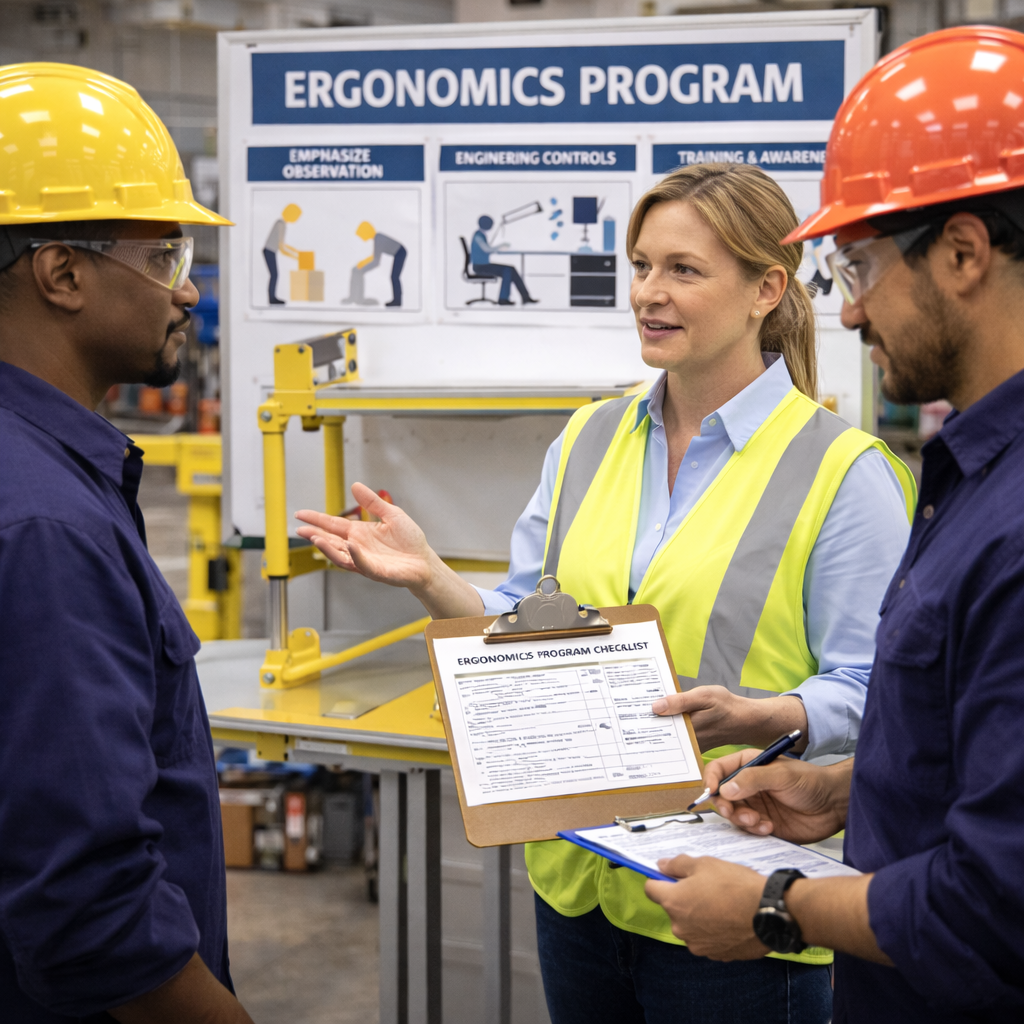
Poor ergonomics quietly drains productivity, increases discomfort, and raises the risk of musculoskeletal disorders. This course helps learners understand how to build and support an effective ergonomics program through risk screening, workstation and task assessment, control planning, training, and ongoing evaluation.
Why this course matters
Ergonomic issues rarely appear all at once. They build over time through repetitive tasks, awkward postures, force, poor workstation design, and overlooked work patterns. Left unmanaged, these risks can affect employee wellbeing, increase absence, and reduce overall efficiency.
This course is designed to help organisations move from reactive fixes to a more structured, preventative ergonomics approach that supports both people and performance.
🪑
Improve workstation fit
Understand how better workstation and task design can reduce strain and support healthier work habits.
📋
Create a structured program
Learn how screening, assessment, planning, training, and review work together in a practical ergonomics program.
⚙️
Support better controls
Build confidence in selecting and supporting control measures that improve comfort and reduce risk.
📈
Drive continuous improvement
Strengthen your ability to review outcomes, monitor progress, and improve ergonomic performance over time.
From isolated fixes to a smarter ergonomics strategy
Many workplaces respond to discomfort only after employees begin reporting pain or fatigue. By then, productivity may already be affected and risks may be embedded in everyday tasks.
This course helps learners take a more proactive view of ergonomics. Instead of relying on one-off adjustments, participants gain a clearer understanding of how to administer an ergonomics program that identifies issues early, prioritises action, and supports practical improvements.
The result is a stronger foundation for reducing exposure, improving comfort, and creating work environments that support people in performing at their best.
Learning Outcomes
By the end of this course, learners should be able to:
- Explain the purpose and value of an ergonomics program within the workplace.
- Recognise common ergonomic risk factors linked to discomfort, strain, and musculoskeletal disorders.
- Understand how risk screening can be used to identify priority areas for ergonomic review.
- Describe the basics of task and workstation assessments and what they are intended to reveal.
- Support the planning and implementation of ergonomic controls and improvements.
- Understand the role of training, awareness, and communication in sustaining ergonomic good practice.
- Identify how monitoring and evaluation help measure program effectiveness and guide improvement.
- Contribute to a more comfortable, efficient, and prevention-focused work environment.
Who This Is For
Safety and HSE professionals
Suitable for those involved in workplace risk reduction, health initiatives, and practical control planning.
Managers and supervisors
Helpful for leaders responsible for teams, work processes, workstation conditions, and daily operational improvement.
HR, compliance, and wellbeing teams
A strong fit for professionals supporting employee wellbeing, policy implementation, and safer workplace practices.
Anyone involved in ergonomics improvement
Useful for those contributing to workstation reviews, process redesign, training, or continuous improvement efforts.
Build a stronger ergonomics culture
An effective ergonomics program does more than address discomfort. It helps create safer systems of work, supports productivity, and shows a clear commitment to employee wellbeing. This course gives learners the practical foundation to help make that happen.
Related topics: ergonomics, ergonomic hazards, musculoskeletal injury prevention, workstation setup, manual handling, body mechanics, repetitive strain, safe lifting, risk assessment, employee wellness, workplace safety, occupational health