Construction Lifting Operations • Hazard Awareness • Safer Crane Work
Cranes and Derricks Safety Training
Crane and derrick operations can transform productivity on site—but they also introduce some of the highest-consequence hazards in construction. Suspended loads, power line exposure, ground instability, poor communication, and unsafe setup can lead to serious incidents in seconds. This course helps learners build the awareness needed to recognize these risks early, work with greater control, and support safer lifting operations from start to finish.
Why This Training Matters
Crane-related incidents are often severe because they involve heavy loads, moving equipment, critical lift zones, and multiple workers relying on timing and communication. A small error in planning, signaling, setup, or clearance can escalate quickly into injury, damage, downtime, or catastrophic failure.
What Learners Gain
This course is designed to strengthen hazard recognition, improve lifting-operation awareness, and reinforce safer work practices around cranes and derricks. Learners gain a clearer understanding of how planning, inspections, communication, load control, and site conditions all work together to reduce risk.
Why Teams Take Action
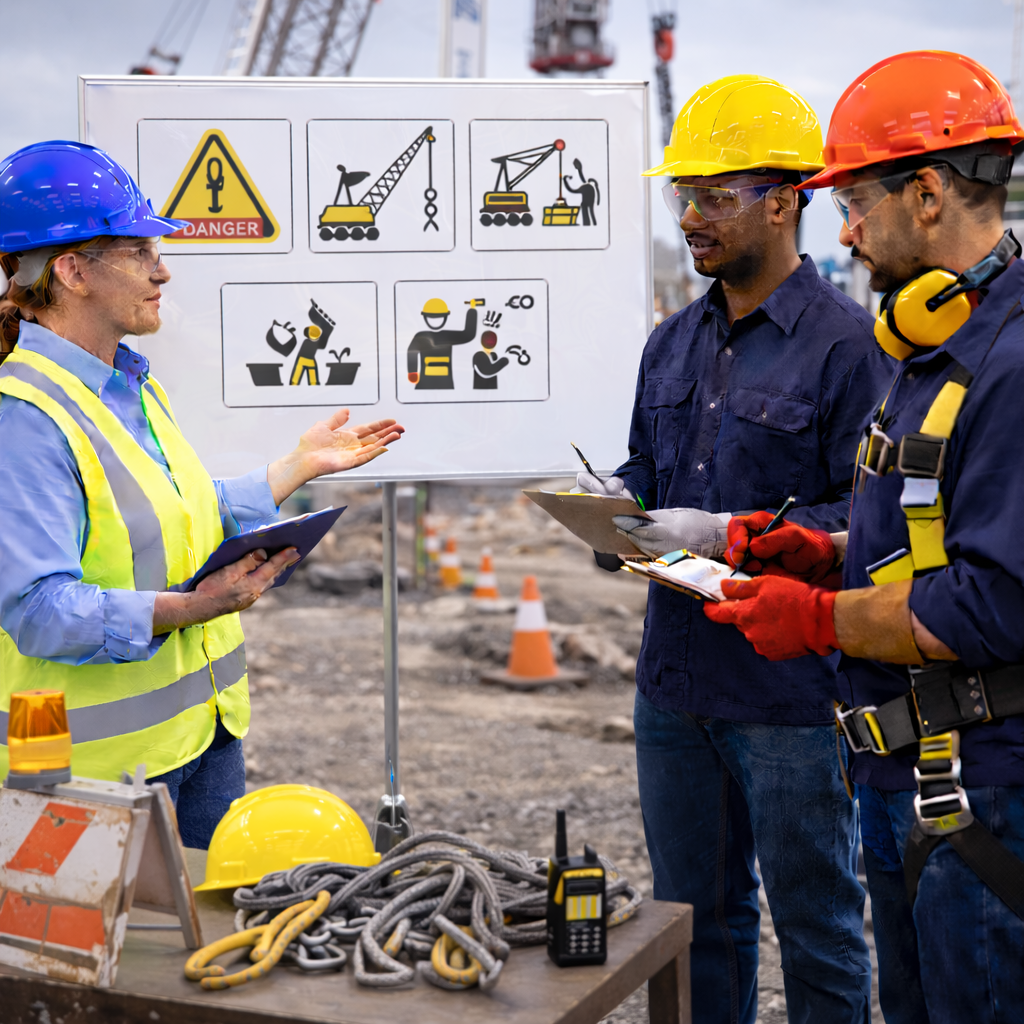
Whether you are onboarding operators, supporting signal persons and rigging crews, or reinforcing safer lifting standards across projects, this training provides practical awareness that can be applied immediately on active jobsites.
What This Course Helps Address
Lift Planning and Ground Condition Awareness
Reinforce the importance of setup conditions, work area preparation, and planning before lifting operations begin.
Assembly, Disassembly, and Equipment Readiness
Improve awareness of the risks linked to crane setup, dismantling, inspections, and operational readiness before work starts.
Signal Communication and Load Control
Support better coordination between operators, signal persons, riggers, and nearby workers to reduce struck-by and load-handling risks.
Power Line and Work Zone Hazard Awareness
Build stronger awareness around clearance, exclusion zones, and site controls in areas where overhead hazards or restricted movement create elevated risk.
Learning Outcomes
- Identify major hazards associated with cranes and derricks, including suspended loads, poor communication, unstable setup, and overhead hazards.
- Recognize the importance of proper planning, work area preparation, and ground condition awareness before lifting operations begin.
- Understand the role of inspections, equipment readiness, and safer assembly/disassembly practices in preventing incidents.
- Explain why clear signaling, communication, and coordination are critical during lifting operations.
- Describe key precautions for working near power lines and other restricted or high-risk work zones.
- Improve hazard recognition and day-to-day decision-making around crane and derrick operations.
- Support safer lifting practices and stronger safety accountability across crews, operators, and supervisors.
Who This Is For
- Crane and derrick operators who need stronger hazard awareness and safer lifting-operation practices.
- Signal persons, riggers, and support crews involved in lifting, setup, or load-control activities.
- Supervisors, foremen, and site leaders responsible for crane safety performance and work zone control.
- New hires who need a practical introduction to crane and derrick hazards and safer work expectations.
- Construction organizations looking to reduce incidents, improve communication, and reinforce safe lifting culture.
Safer Lifting Starts with Better Awareness
The safest crane operations are built on preparation, communication, and control. This training helps learners understand the risks before they escalate, make better decisions during active lifting, and contribute to jobsite operations that are safer, smoother, and more dependable every day.
Related topics: crane safety, rigging safety, load handling, signal person, load charts, crane inspection, lifting operations, swing radius, suspended loads, competent person, construction safety, compliance training