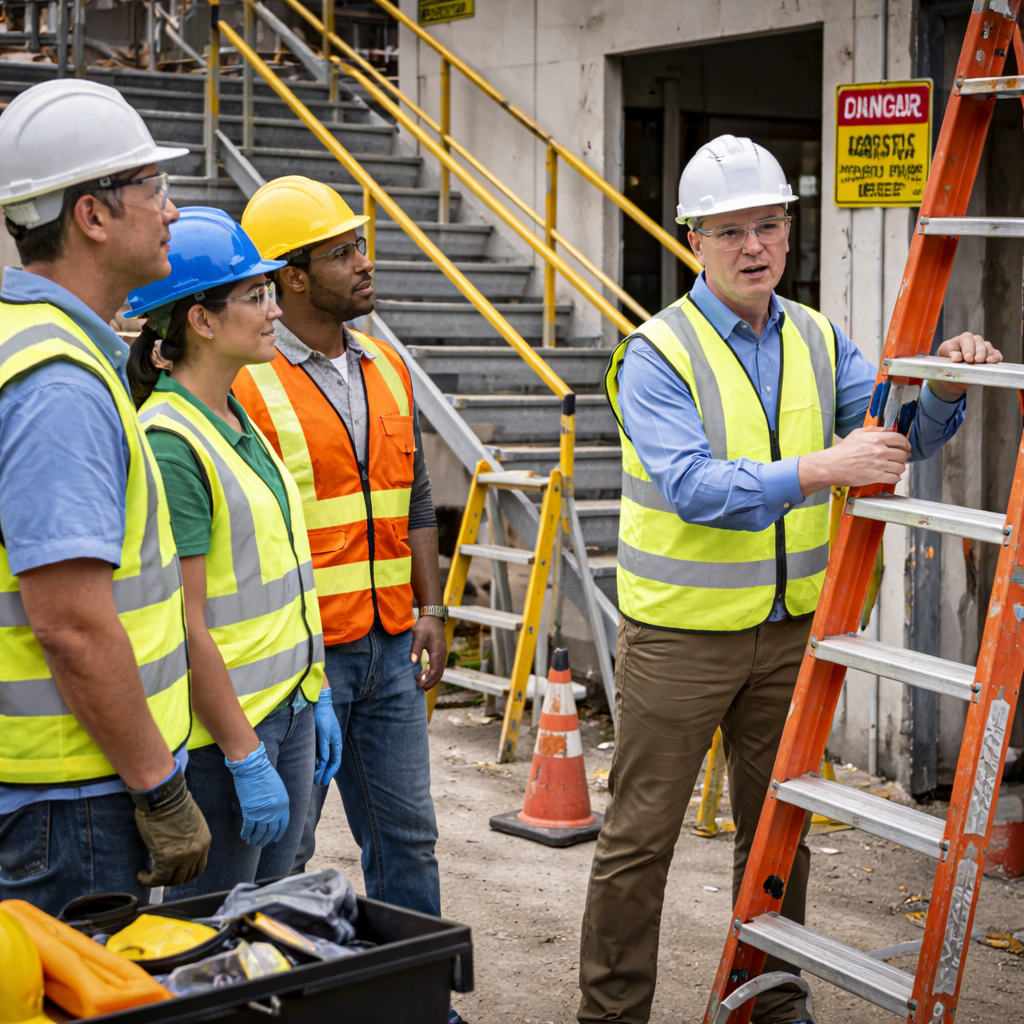
Stairway & Ladder Safety Training
Prevent Falls Before They Happen. Build Safer Access Habits Every Day.
Stairways and ladders are part of everyday work, which is exactly why their risks are so often underestimated. A rushed climb, poor setup, damaged ladder, blocked stairway, or one unsafe shortcut can lead to serious injury in seconds. This course helps learners build the awareness and judgment needed to use stairways and ladders more safely, reduce fall risk, and support safer work at height across the workplace.
Why This Training Matters
Many stairway and ladder incidents happen during routine tasks when workers rely on habit instead of safe practice. Unsafe placement, incorrect ladder choice, poor inspection, slippery footwear, carrying items while climbing, overreaching, and blocked or poorly maintained stairways can all turn simple access into a major hazard.
This training helps teams move from assumption to safer action by strengthening awareness of fall hazards, setup principles, inspection checks, and the safe behaviors that reduce preventable incidents.
What Makes This Course Valuable
Stronger Fall-Hazard Awareness
Understand where stairway and ladder risks arise and why routine access tasks can become dangerous without proper checks and control.
Better Daily Safety Decisions
Build practical awareness of ladder choice, safe setup, stairway condition, housekeeping, and climbing behaviors that help prevent falls.
More Reliable Workplace Protection
Support a stronger safety culture where workers report defects earlier, avoid shortcuts, and use access equipment with more care and discipline.
Course Overview
This course provides a practical introduction to stairway and ladder safety in the workplace. It focuses on common fall hazards, correct ladder selection, inspection, safe positioning, safe climbing practices, and the control measures that help protect workers during everyday access and short-duration work tasks.
It is designed for organizations that want stronger fall-prevention awareness and for learners who need a clear, practical foundation in safer stairway and ladder use.
Learning Outcomes
By the end of this course, learners should be able to:
- Explain why stairway and ladder safety is essential in preventing falls and related workplace injuries.
- Recognize common hazards linked to stairways, stepladders, and portable ladders.
- Identify how to choose the right ladder type and size for the task and environment.
- Understand the importance of pre-use inspection and when damaged equipment must not be used.
- Describe safe setup and placement principles that improve ladder stability and reduce movement risk.
- Recognize safe climbing behaviors such as maintaining control, avoiding overreaching, and keeping access areas clear.
- Understand the role of housekeeping, footwear, and clear stairway access in preventing slips, trips, and falls.
- Support safer reporting, earlier intervention, and more consistent fall-prevention practices across everyday work activities.
Who This Is For
- Employees who use ladders or stairways during routine work, maintenance, inspection, stock access, or short-duration tasks.
- Facilities, maintenance, warehousing, construction, logistics, and operations personnel who rely on safe access equipment.
- Supervisors and team leaders responsible for safe work practices, equipment condition, and fall-risk awareness.
- Health and safety personnel seeking to strengthen practical fall-prevention awareness across teams.
- New starters and existing staff who need a clear foundation in safer stairway and ladder use.
- Organizations aiming to reduce preventable falls, improve equipment discipline, and strengthen everyday safety performance.
Why Add This Course to Your Safety Program
Stairway and ladder risks are much easier to control when workers understand them before a fall occurs. Training helps teams choose equipment more carefully, inspect it more consistently, and work with safer habits during tasks that are often treated as routine.
For employers, that means fewer avoidable incidents, better fall-risk control, and stronger day-to-day safety discipline. For learners, it means practical knowledge they can apply immediately in real workplace situations.
Build Safer Access Habits Before a Simple Task Turns Into a Serious Fall
The safest workplaces are the ones where everyday access tasks are treated with the attention they deserve. This course helps teams strengthen that awareness and create a more reliable, more protective approach to stairway and ladder safety.
Related topics: fall protection, slip trip fall prevention, walking working surfaces, ladder safety, stairway safety, guardrails, personal fall arrest systems, hazard inspection, work at height, scaffolding, incident prevention, workplace safety