Crane Safety & Rigging Essentials
Lift Smarter. Rig Safer. Prevent Incidents Before the Load Leaves the Ground.
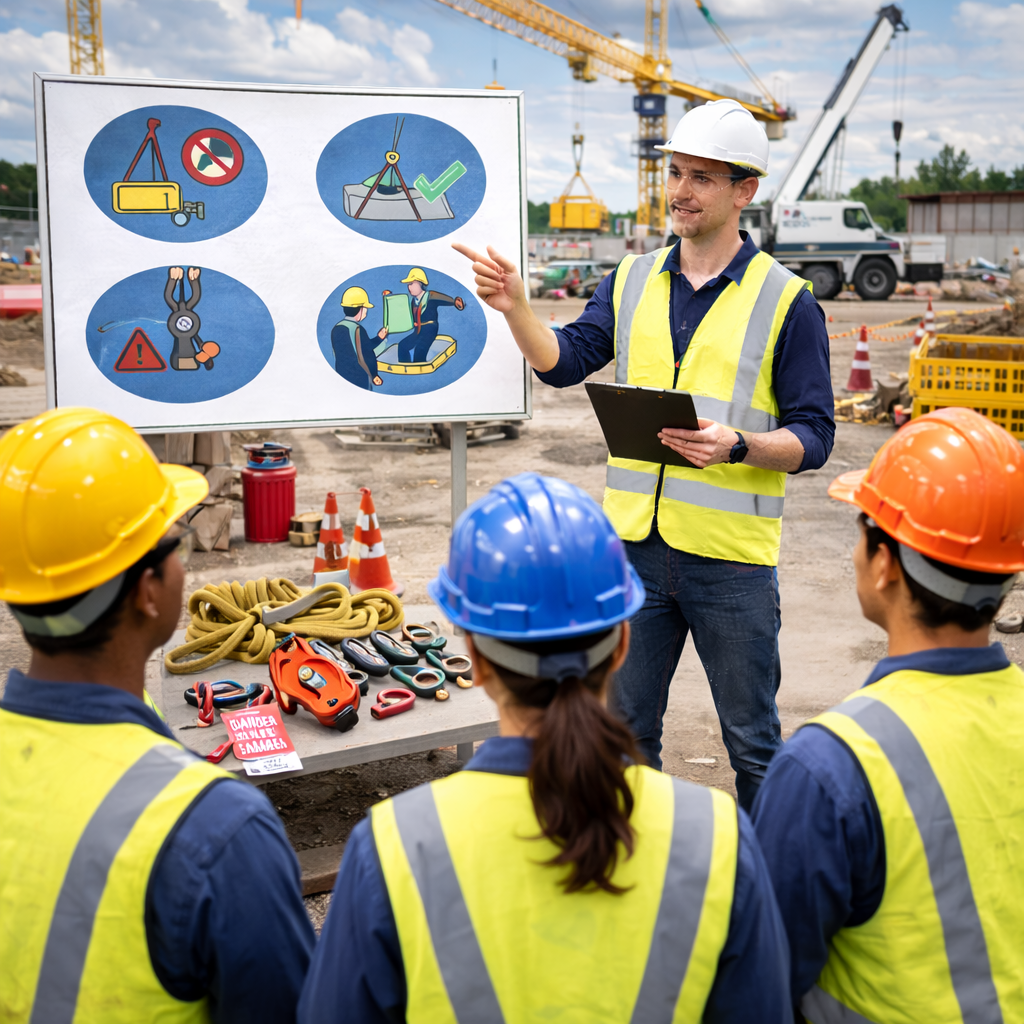
Crane and rigging operations demand precision, coordination, and constant hazard awareness. One error in planning, load control, communication, or rigging setup can lead to dropped loads, equipment damage, serious injury, and costly project delays. This course helps learners build the essential safety knowledge needed to support safer lifting operations in real working environments.
Why This Training Matters
Lifting operations are high-risk activities where unsafe rigging, poor communication, inadequate inspections, unstable loads, and weak lift planning can escalate into major incidents. Safe lifting is not only about the crane itself. It depends on the people, the rigging method, the load condition, the environment, and the control measures in place before the lift begins.
This course is designed to help workers and supervisors understand those essentials clearly, so lifting operations can be carried out with more control, consistency, and confidence.
What Makes This Course Valuable
Stronger Hazard Awareness
Understand the risks linked to suspended loads, poor rigging choices, shifting centers of gravity, blind lifts, unstable ground, and nearby personnel.
Better Lift Preparation
Build knowledge around inspections, load assessment, equipment suitability, exclusion zones, and the planning steps that reduce lifting-related incidents.
Safer Team Coordination
Support clearer communication between operators, riggers, signalers, supervisors, and ground teams during critical lifting tasks.
Course Overview
This course introduces the essential principles of crane safety and rigging awareness for safer lifting operations. It focuses on practical risk recognition, safer rigging selection and use, load stability, pre-lift checks, communication practices, and the controls needed to help protect people, equipment, and surrounding operations.
Whether learners are directly involved in lifting tasks or responsible for overseeing them, this training provides a strong foundation for safer decisions before, during, and after a lift.
Learning Outcomes
By the end of this course, learners should be able to:
- Explain the core principles of crane safety and rigging in lifting operations.
- Identify common hazards associated with suspended loads, poor rigging setup, inadequate planning, and unsafe movement.
- Recognize the importance of pre-use inspections for cranes, slings, shackles, hooks, and lifting accessories.
- Understand safe working load limits, equipment suitability, and why proper identification and condition checks matter.
- Improve awareness of load balance, center of gravity, sling angles, and how rigging choices affect lift stability.
- Understand the role of lift planning, supervision, and exclusion zones in safer lifting operations.
- Recognize the importance of clear signaling and communication between operators, riggers, and support teams.
- Apply safer work practices that help reduce dropped loads, struck-by incidents, equipment damage, and avoidable downtime.
Who This Is For
- Crane operators who want to strengthen safety awareness and lifting best practices.
- Riggers, slingers, and signalers involved in preparing, securing, or directing loads.
- Construction, industrial, logistics, marine, and infrastructure personnel working around lifting operations.
- Supervisors and team leaders responsible for planning, monitoring, or coordinating lifting activities.
- Health and safety personnel seeking stronger awareness of crane and rigging risks and controls.
- Organizations aiming to improve lifting safety culture, reduce incidents, and reinforce operational discipline across teams.
Why Add This Course to Your Safety Program
Safe lifting operations depend on more than equipment capacity. They rely on informed decisions, competent preparation, suitable rigging, and clear communication at every stage. When teams understand the essentials, they are better equipped to spot unsafe conditions early and prevent minor issues from becoming major events.
For businesses, that means stronger risk control, better operational reliability, and fewer preventable losses. For learners, it means greater awareness, more confidence, and a clearer understanding of their role in safe lifting operations.
Build Safer Lifting Operations From the First Step
Every successful lift starts with preparation, awareness, and the right safety decisions. This course helps teams strengthen the essentials that protect workers, loads, equipment, and project performance where lifting risks are part of the job.
Related topics: crane safety, rigging safety, load handling, signal person, load charts, crane inspection, lifting operations, swing radius, suspended loads, competent person, construction safety, compliance training