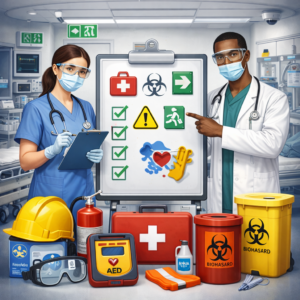
Bloodborne Pathogens Awareness & Compliance
Build safer habits that reduce exposure, prevent incidents, and protect your workforce with confidence.
Biological risks are not always obvious, but the consequences of poor control can be serious. This course helps teams understand where exposure happens, what safe action looks like, and how to turn infection-control expectations into consistent daily practice.
Why bloodborne pathogens training matters
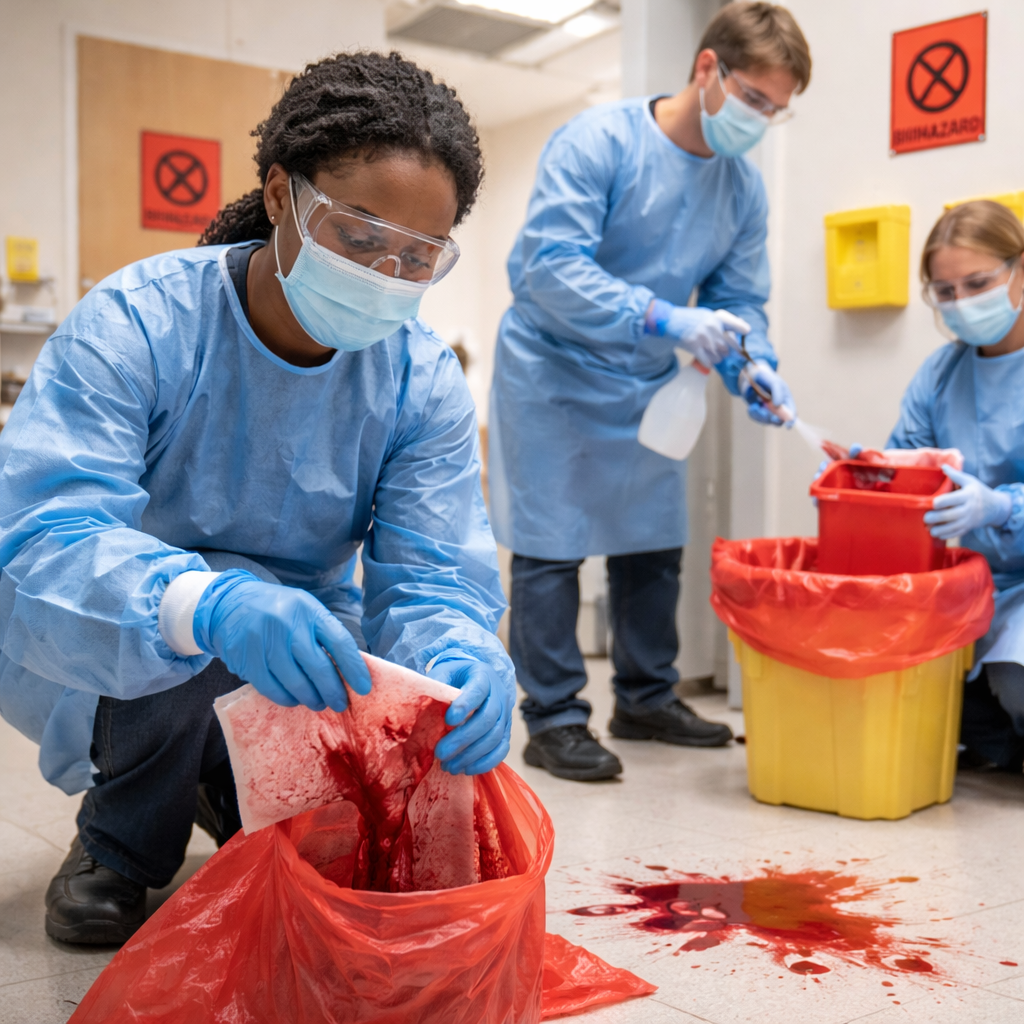
Exposure risks can arise quickly through sharps injuries, splashes, contaminated surfaces, poor cleanup practices, and improper handling of materials, laundry, or waste. Without the right awareness and response, small mistakes can lead to serious exposure events, cross-contamination, operational disruption, and avoidable harm.
This training is designed to give learners practical, plain-language guidance they can use immediately, helping them recognize hazards sooner, respond correctly, and support safer environments in healthcare and similar settings.
What this course helps you achieve
Reduce Exposure Risk
Understand where bloodborne hazards are most likely to occur and how to reduce preventable exposure during routine tasks.
Improve Safe Practice
Apply standard precautions, hygiene measures, surface controls, and safer cleanup routines more consistently.
Respond Faster
Know what to do after splashes, sharps incidents, symptoms, or contamination concerns so action happens without delay.
Support Compliance
Build clearer routines, shared vocabulary, and better reporting habits that strengthen safety culture across shifts and teams.
Course Overview
This Bloodborne Pathogens Awareness & Compliance course provides a practical foundation for controlling biological hazards and infection-control risks before they become incidents. It focuses on real exposure points, safer decision-making, and repeatable actions that help reduce infection risk in healthcare and similar work environments.
Learners will explore how biological hazards spread, where exposure most often occurs, how to apply standard precautions, how to handle contaminated materials more safely, and how to respond appropriately after an exposure event. The result is stronger day-to-day performance, fewer preventable mistakes, and more confident protection for people and workplaces.
Learning Outcomes
- Understand what bloodborne pathogens are and why occupational exposure presents a serious workplace risk.
- Recognize where exposure most often occurs, including splashes, sharps injuries, contaminated surfaces, and poor handling practices.
- Apply standard precautions, hygiene routines, and surface or space controls to reduce infection risk.
- Handle contaminated materials, laundry, and waste more safely and consistently.
- Use PPE more effectively for biological-risk tasks and understand its role in exposure prevention.
- Respond correctly to incidents involving sharps, splashes, symptoms, or suspected contamination.
- Report exposure events promptly and know when to stop work and escalate concerns.
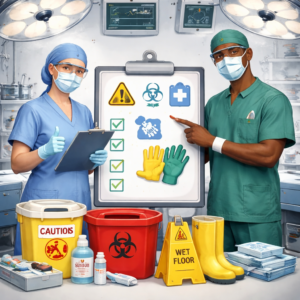
- Build practical routines and checklists that improve compliance and support safer performance on every shift.
Who This Is For
Healthcare staff
Custodial and environmental services teams
First aiders and response personnel
Supervisors and team leaders
Contractors working in biological-risk environments
Any workforce with blood or body-fluid exposure risks
Why this training adds real value
Bloodborne hazards demand more than awareness alone. Teams need clear habits, fast reporting, safer handling practices, and a shared understanding of when to act, when to stop, and when to escalate.
This course helps turn safety expectations into repeatable performance by improving handoffs between crews, supervisors, and contractors, while reducing preventable exposures, downtime, and confusion during critical moments.
Turn awareness into safer action on every shift
Give your team the knowledge to prevent exposure, respond correctly, and maintain stronger biological-risk controls with confidence, consistency, and better day-to-day protection.
Related topics: workplace hygiene, infection prevention, illness prevention, cleaning procedures, disinfecting, exposure control, hand hygiene, PPE, sanitation, workplace health, communicable disease controls, compliance training