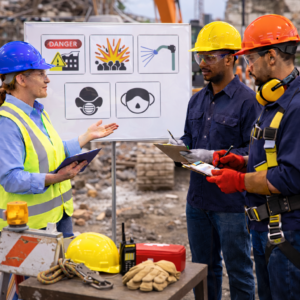
Biological Health Hazards in Construction Training
Help your workforce recognise hidden biological risks on site before exposure turns into illness and disruption
Not every construction hazard is immediate or obvious. Biological risks can be present in contaminated water, waste, damp environments, animal activity, poor hygiene conditions, and other site exposures that are easy to overlook. This course gives learners practical awareness of biological health hazards in construction so they can recognise risks earlier, work more carefully, and support healthier site conditions every day.
Why this course matters
Biological hazards in construction are often underestimated because they do not always look dangerous at first glance. But poor welfare conditions, exposure to contaminated materials, contact with harmful microorganisms, and weak hygiene practices can all increase the risk of illness and affect both workers and site performance.
This training helps organisations strengthen awareness of a risk area that is often missed in day-to-day planning. Learners build a practical understanding of how biological hazards arise, where exposure may happen, and why good hygiene, cleaner site conditions, and earlier reporting all matter in preventing harm.
🦠
Recognise Biological Risks Earlier
Improve awareness of the less visible health hazards that can affect workers on construction sites.
🚿
Support Better Hygiene Practices
Reinforce safer habits around welfare, cleanliness, hand hygiene, and everyday site conduct.
⚠️
Reduce Overlooked Exposure Risks
Help learners spot conditions that may increase illness risk before they become a bigger problem.
📋
Strengthen Site Health Culture
Encourage better reporting, cleaner working practices, and more health-conscious decision-making.
Course Overview
Biological Health Hazards in Construction Training is designed to give learners a practical introduction to the biological risks that can be present on construction sites and in related work environments. It focuses on the conditions and exposures that may not always be obvious, but can still create serious health concerns when they are ignored or poorly controlled.
The course helps learners understand how biological hazards can arise through contaminated environments, poor site hygiene, waste contact, damp conditions, exposure to harmful microorganisms, and other site-related factors. It builds awareness of why these risks matter, how they can affect worker health, and why good welfare standards and cleaner working practices play such an important role in prevention.
For employers, this training supports stronger occupational health awareness, better site hygiene behaviour, and a more prevention-focused approach to construction health risks. It helps create a workforce that is better prepared to recognise issues early, act more responsibly, and contribute to healthier site conditions over time.
Learning Outcomes
✓ Understand what biological health hazards are in construction-related environments
✓ Recognise how poor hygiene, contaminated materials, and site conditions can increase illness risk
✓ Build awareness of where biological exposure may occur during construction work
✓ Improve understanding of the role of welfare, hygiene, and cleaner site practices in prevention
✓ Recognise the importance of early reporting and safer behaviour when exposure concerns arise
✓ Support a stronger occupational health culture across construction teams and site operations
Who This Is For
This course is especially suitable for:
Construction workers
Groundworkers and site operatives
Supervisors and team leaders
Site managers
Health and safety coordinators
Anyone exposed to site hygiene or contamination risks
It is ideal for organisations that want to improve awareness of biological health risks on site, support stronger hygiene standards, and build a more health-conscious culture across construction operations.
Healthier sites start with better awareness
Biological risks are easy to miss when attention stays focused only on visible hazards. But when workers understand where exposure can happen and how to respond more safely, health protection becomes stronger across the whole site.
Give your workforce the practical awareness to recognise biological health hazards sooner, improve hygiene behaviour, and help create a cleaner, safer, and more resilient construction environment.
Related topics: workplace hygiene, infection prevention, illness prevention, cleaning procedures, disinfecting, exposure control, hand hygiene, PPE, sanitation, workplace health, communicable disease controls, compliance training