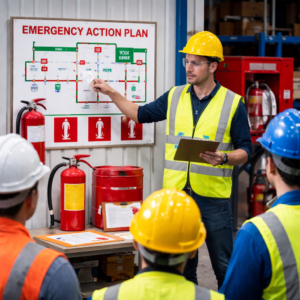
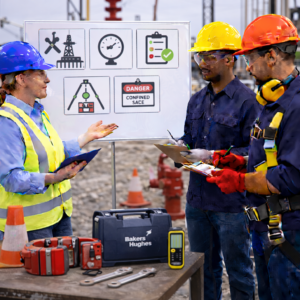
Oil & Gas Safety Training
Oil & Gas Hazard Awareness Training
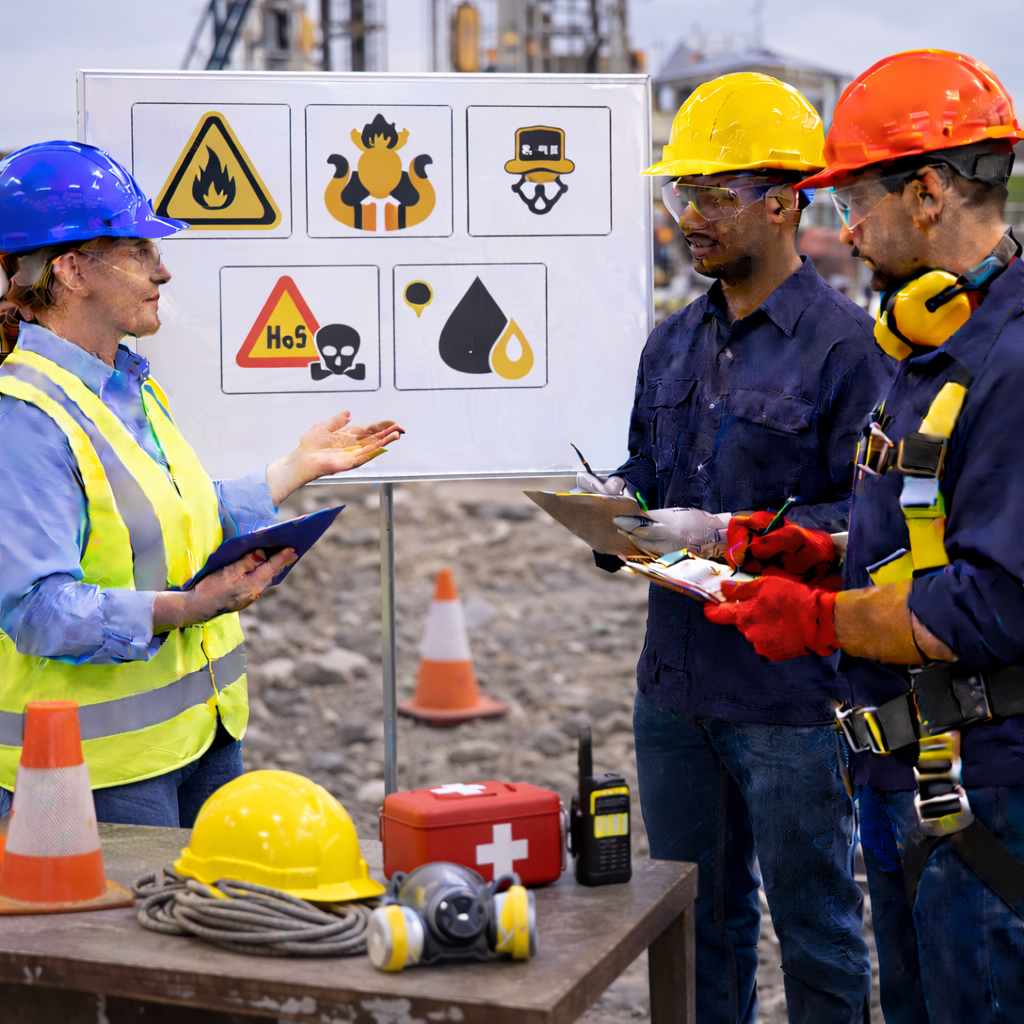
Oil and gas operations move fast, involve complex equipment, and expose workers to multiple hazards in a single shift.
This course helps learners recognize common field risks early, understand why those risks escalate quickly, and build
the awareness needed to work more safely, confidently, and responsibly.
Recognize Hazards Earlier
Build stronger awareness of field conditions, equipment risks, hazardous energy, vehicle movement, and exposure hazards before they lead to incidents.
Strengthen Safe Decisions
Support safer day-to-day judgment around work activities, task planning, isolation awareness, and site behavior.
Support a Safer Operation
Help reinforce a more safety-focused workforce that is better prepared to spot risks and respond with greater control and consistency.
Why This Course Matters
In oil and gas environments, hazards are rarely isolated. Workers may face moving equipment, high-pressure systems, vehicle traffic,
slips and falls, hazardous energy, manual handling demands, and exposure risks across the same jobsite. Without strong hazard awareness,
routine tasks can quickly become high-consequence events.
That is why hazard awareness training is essential. When people understand what to watch for, where risk can build, and how control measures
support safer work, they are better positioned to protect themselves, their teams, and the operation as a whole.
This course is designed to give learners a practical foundation in oil and gas hazard awareness. It helps translate safety expectations into
real-world understanding so teams can approach field activities with sharper attention, better judgment, and a stronger safety mindset.
What You’ll Explore
- Common safety and health hazards across oil and gas operations
- Vehicle, equipment, and line-of-fire risks on active worksites
- Hazardous energy and isolation awareness fundamentals
- Exposure-related risks involving gases, vapors, chemicals, noise, and dust
- Safe work practices that help reduce incident potential
- Awareness of lifting, manual handling, and ergonomic strain factors
- The role of PPE, planning, communication, and housekeeping
- How stronger awareness supports safer, more compliant operations
Learning Outcomes
- Identify common hazards associated with oil and gas field activities
- Recognize situations that may increase the risk of injury, illness, or loss of control
- Understand the importance of hazard recognition before starting and during work tasks
- Describe the role of isolation awareness and hazardous energy control in safer operations
- Explain how vehicle movement, equipment interaction, and high-pressure systems can create serious risk
- Recognize common exposure hazards and the importance of protective measures
- Apply safer work practices that support better field awareness and decision-making
- Contribute to a stronger safety culture through more informed, risk-aware behavior
Who This Is For
Field Workers
Suitable for personnel involved in drilling, servicing, production, maintenance, transport, and general oil and gas site operations.
Supervisors & Team Leads
Valuable for those responsible for planning work, reinforcing safe behaviors, and improving hazard awareness across crews.
Contractors & Safety Personnel
Ideal for contractors, safety officers, and employers seeking stronger frontline awareness and more consistent risk recognition.
Safer Work Starts with Better Awareness
The most effective safety decisions happen before something goes wrong. With stronger hazard awareness, workers are better prepared to
recognize changing conditions, take smarter precautions, and contribute to a more controlled and safety-focused operation.
Give your team the awareness they need to recognize risks sooner, act with greater confidence, and support safer performance across the site.
Related topics: hearing protection, noise exposure, hearing conservation, audiometric testing, noise controls, PPE, sound levels, occupational health, workplace safety, regulatory compliance, employee training, risk assessment