Lockout/Tagout Energy Control Training
Stop Unexpected Start-Up Before It Starts. Control Hazardous Energy With Confidence.
Some of the most serious maintenance and servicing injuries happen when energy is assumed to be off when it is not truly isolated. Electrical, mechanical, hydraulic, pneumatic, thermal, gravity, and stored energy hazards can all turn a routine task into a life-changing incident. This course helps learners understand how lockout/tagout and energy control protect people, equipment, and operations before work begins.
Why This Training Matters
Hazardous energy incidents rarely happen without a control failure somewhere in the process. Poor isolation, missing procedures, inadequate communication, weak verification, stored energy release, and rushed maintenance can all expose workers to crushing, entanglement, cutting, shock, burns, and unexpected machine movement.
This training helps teams move from assumption to certainty by building a stronger understanding of how energy is identified, isolated, locked, tagged, verified, and controlled throughout servicing, cleaning, setup, maintenance, and repair activities.
What Makes This Course Valuable
Stronger Hazardous Energy Awareness
Understand how different energy sources create risk and why “switched off” is not the same as safely isolated and verified.
Better Energy Control Discipline
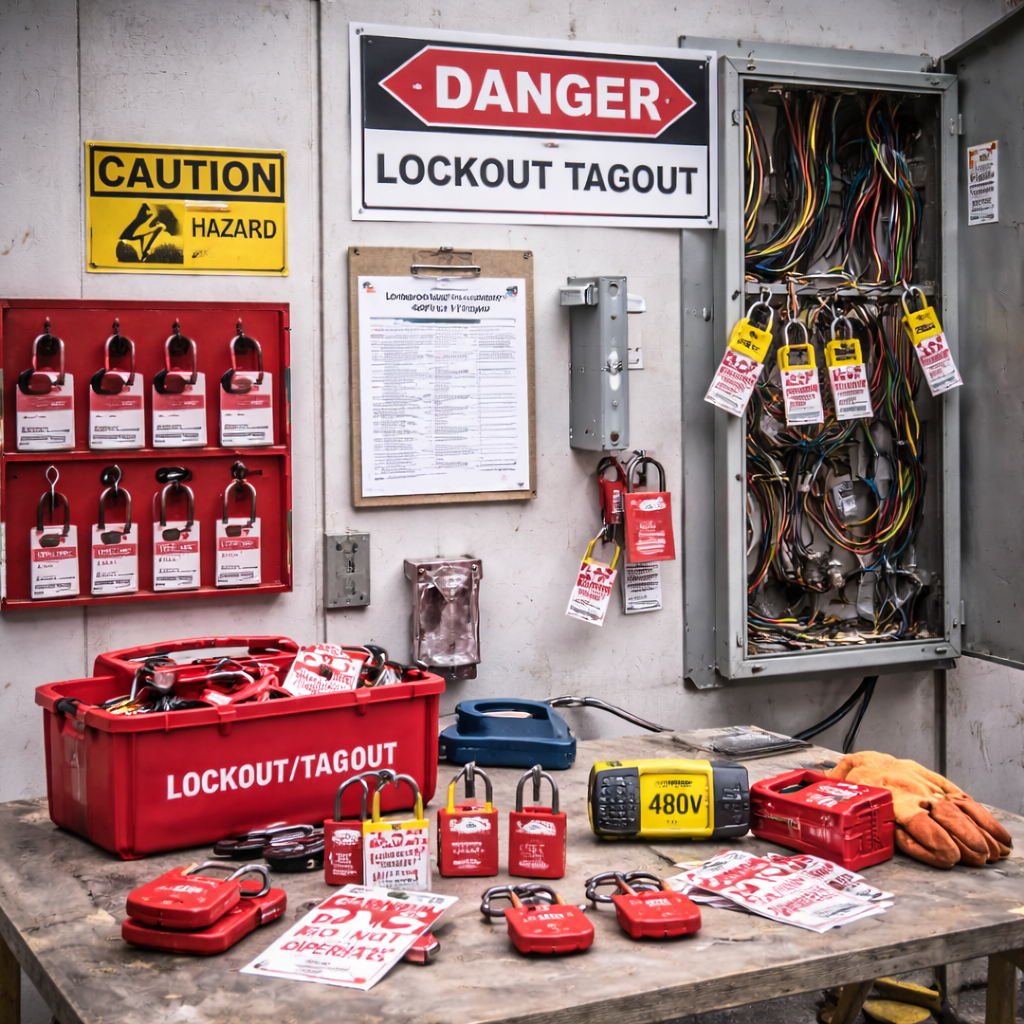
Build practical awareness of identifying energy sources, using locks and tags correctly, controlling stored energy, and verifying zero-energy state before work starts.
Safer Maintenance and Servicing Operations
Support a workplace culture where procedures are followed, roles are clear, and unexpected energization is treated as a critical risk every time.
Course Overview
This course provides a practical introduction to lockout/tagout and energy control for workplace servicing and maintenance activities. It focuses on identifying hazardous energy, applying isolation methods, locking and tagging equipment correctly, controlling stored energy, verifying safe conditions, and supporting safe re-energization once work is complete.
It is designed for organizations that want stronger energy-control awareness and for learners who need a clear, practical foundation in safer lockout/tagout practices.
Learning Outcomes
By the end of this course, learners should be able to:
- Explain why lockout/tagout and energy control are essential in preventing unexpected start-up and hazardous energy release.
- Recognize common energy sources such as electrical, mechanical, hydraulic, pneumatic, thermal, chemical, and gravity-related energy.
- Understand the difference between shutting equipment down and isolating it safely.
- Identify the importance of locks, tags, written procedures, and clear role responsibilities during servicing and maintenance.
- Recognize why stored or residual energy must be released, restrained, or otherwise controlled before work begins.
- Understand the importance of verifying zero-energy state before starting work.
- Describe how group lockout/tagout, shift changes, contractors, and re-energization require careful coordination and communication.
- Support a stronger safety culture through better procedure use, earlier reporting, and more consistent energy-control discipline.
Who This Is For
- Maintenance, engineering, facilities, and operations personnel involved in servicing, cleaning, setup, repair, or adjustment of equipment.
- Supervisors and team leaders responsible for safe maintenance practices, permits, and procedure compliance.
- Health and safety personnel seeking stronger awareness of hazardous-energy control and lockout/tagout fundamentals.
- Authorized employees, affected employees, and those working around machinery subject to energy-control procedures.
- Contractors and support personnel who need a practical understanding of safe isolation and coordination during maintenance work.
- Organizations aiming to reduce serious maintenance injuries, improve procedural discipline, and strengthen energy-control performance.
Why Add This Course to Your Safety Program
Hazardous energy is one of the most unforgiving risks in the workplace, which is why control must be deliberate, repeatable, and understood by everyone involved. Training helps teams isolate equipment correctly, verify safe conditions, manage stored energy, and prevent the kinds of maintenance incidents that cause severe injury, downtime, and operational loss.
For employers, that means stronger compliance, better maintenance control, and fewer catastrophic surprises. For learners, it means practical knowledge they can apply immediately to make servicing and maintenance work safer every shift.
Build Safer Energy Control Before Maintenance Begins
The safest maintenance work starts long before a tool touches the machine. It starts with correct isolation, clear communication, and proven control of hazardous energy. This course helps teams strengthen those essentials and create a more informed, more protective approach to lockout/tagout and energy control.
Related topics: welding safety, cutting safety, brazing safety, hot work, fire prevention, ventilation, fumes and gases, eye protection, PPE, compressed gas cylinders, electrical hazards, workplace safety