Hospital Heliport Safety Training
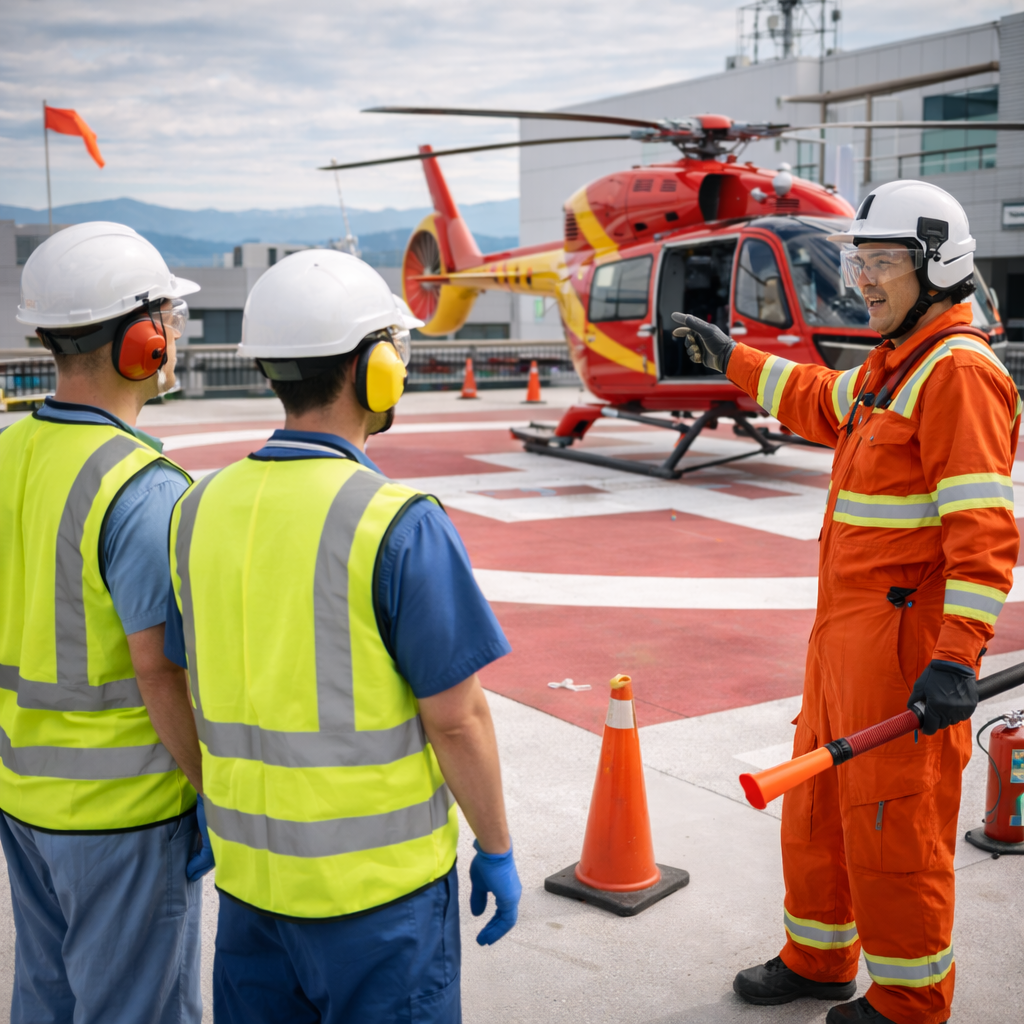
Protect Critical Transfers. Control Heliport Risks. Build Safer Hospital Operations Before an Incident Happens.
Hospital heliports are high-risk operational areas where speed, coordination, and safety must work together flawlessly. From rotor hazards and downwash to restricted access, patient transfer pressures, loose equipment, and communication breakdowns, even a small mistake can create serious consequences. This course helps learners understand the essential controls that support safer heliport operations in demanding healthcare environments.
Why This Training Matters
Heliport activity involves more than the aircraft alone. Staff, patients, porters, responders, equipment, access routes, weather conditions, and surrounding infrastructure all influence safety. Without proper awareness and control, hazards such as rotor strike risk, downwash, unsecured objects, poor approach behavior, and untrained access can escalate quickly.
This training helps teams move from basic awareness to practical readiness by focusing on what must happen before, during, and after helicopter activity to protect people and support safer clinical transfer operations.
What Makes This Course Valuable
Stronger Heliport Hazard Awareness
Understand the key risks around hospital helicopter landing areas, including rotors, downwash, access control, visibility, and movement around active aircraft.
Safer Patient Transfer Coordination
Build practical awareness of how disciplined communication, route control, and role clarity help protect staff, patients, and flight crews during critical transfer activity.
Better Safeguarding Around the Landing Site
Support a more secure and better-managed heliport environment by reducing preventable exposure to uninvolved persons, loose items, and unsafe movements near operations.
Course Overview
This course provides a practical introduction to hospital heliport safety and the controls needed to support safe helicopter landing-site operations in healthcare settings. It focuses on common operational hazards, safe access principles, downwash and rotor risks, patient movement considerations, communication, and the importance of following established local procedures.
It is designed for healthcare organizations that want stronger landing-site safety awareness and for learners who need a clear foundation in the risks and responsibilities associated with hospital heliport operations.
Learning Outcomes
By the end of this course, learners should be able to:
- Explain why hospital heliport operations require strict safety control, trained access, and clear operational discipline.
- Recognize key heliport hazards such as main rotor and tail rotor danger zones, downwash, loose objects, poor visibility, and unsafe approach behavior.
- Understand the importance of restricting access to authorised and properly trained personnel only.
- Identify why clothing, equipment, transfer items, and surrounding objects must be properly secured in and around active landing areas.
- Understand the importance of safe patient transfer arrangements, route control, and communication between hospital teams and flight crews.
- Recognize how weather, layout, surrounding obstacles, and local procedures can affect heliport safety.
- Support safer reporting of hazards, safeguarding concerns, equipment issues, and unsafe conditions around the heliport environment.
- Contribute to a stronger culture of preparedness, coordination, and controlled response during hospital helicopter operations.
Who This Is For
- Hospital staff involved in heliport activity, emergency reception, patient transfer, or landing-site support operations.
- Porters, facilities teams, security personnel, and operational staff responsible for safe access, movement, and area control around the heliport.
- Supervisors, managers, and department leads responsible for emergency readiness and site safety coordination.
- Health and safety personnel seeking stronger awareness of helicopter landing-site hazards in healthcare environments.
- New starters and existing staff who need practical awareness of heliport-specific risks and safer working behavior.
- Healthcare organizations aiming to improve safeguarding, reduce operational risk, and strengthen the safety culture around hospital helicopter activity.
Why Add This Course to Your Safety Program
Hospital heliport risks are easier to control when staff understand them before a landing, transfer, or emergency response is underway. Training helps teams work with greater discipline, reduce avoidable exposure to danger, and support smoother operations in environments where time pressure can make unsafe shortcuts more likely.
For employers, that means stronger safeguarding, better coordination, and more reliable protection for staff, patients, and visitors. For learners, it means practical knowledge they can apply immediately in real hospital heliport situations.
Build Safer Heliport Operations Before the Helicopter Arrives
The safest hospital heliport operations begin with preparation, awareness, and disciplined teamwork. This course helps teams strengthen those essentials and create a more secure, better-managed environment for every landing, transfer, and response.
Related topics: hospital heliport safety, aviation hazards, landing zone safety, emergency response, communication, fire prevention, pedestrian control, FOD prevention, weather awareness, fuel hazards, healthcare safety, compliance training