Hazard Controls Fundamentals
Help your workforce control hazards more effectively and make safer decisions before risk turns into incident
Identifying hazards is only the first step. What protects people is choosing the right control measures and applying them consistently. This course gives learners a practical foundation in hazard controls so they can understand what works best, why it matters, and how safer control decisions support better workplace performance.
Why this course matters
Many workplace incidents happen not because hazards were completely unknown, but because the controls in place were weak, poorly chosen, inconsistently applied, or relied too heavily on individual behaviour alone. When organisations jump straight to basic reminders or PPE without considering stronger controls first, risk often remains higher than expected.
This training helps learners understand how to think more effectively about hazard control. By building awareness of the hierarchy of controls and the role each level plays, teams are better prepared to support safer work design, more reliable control measures, and stronger day-to-day safety performance.
🛡️
Understand Stronger Controls
Build awareness of the control measures that reduce risk more effectively at the source.
⚙️
Make Better Safety Decisions
Help learners choose more appropriate control strategies instead of relying on weak or incomplete measures.
📋
Support Safer Planning
Reinforce the value of selecting, applying, and reviewing controls before work begins.
📈
Strengthen Safety Culture
Encourage a more proactive approach to reducing exposure and preventing incidents.
Course Overview
Hazard Controls Fundamentals is designed to give learners a practical understanding of how workplace risks can be reduced through better control measures. It focuses on the principles behind hazard control and helps learners understand that not all controls offer the same level of protection.
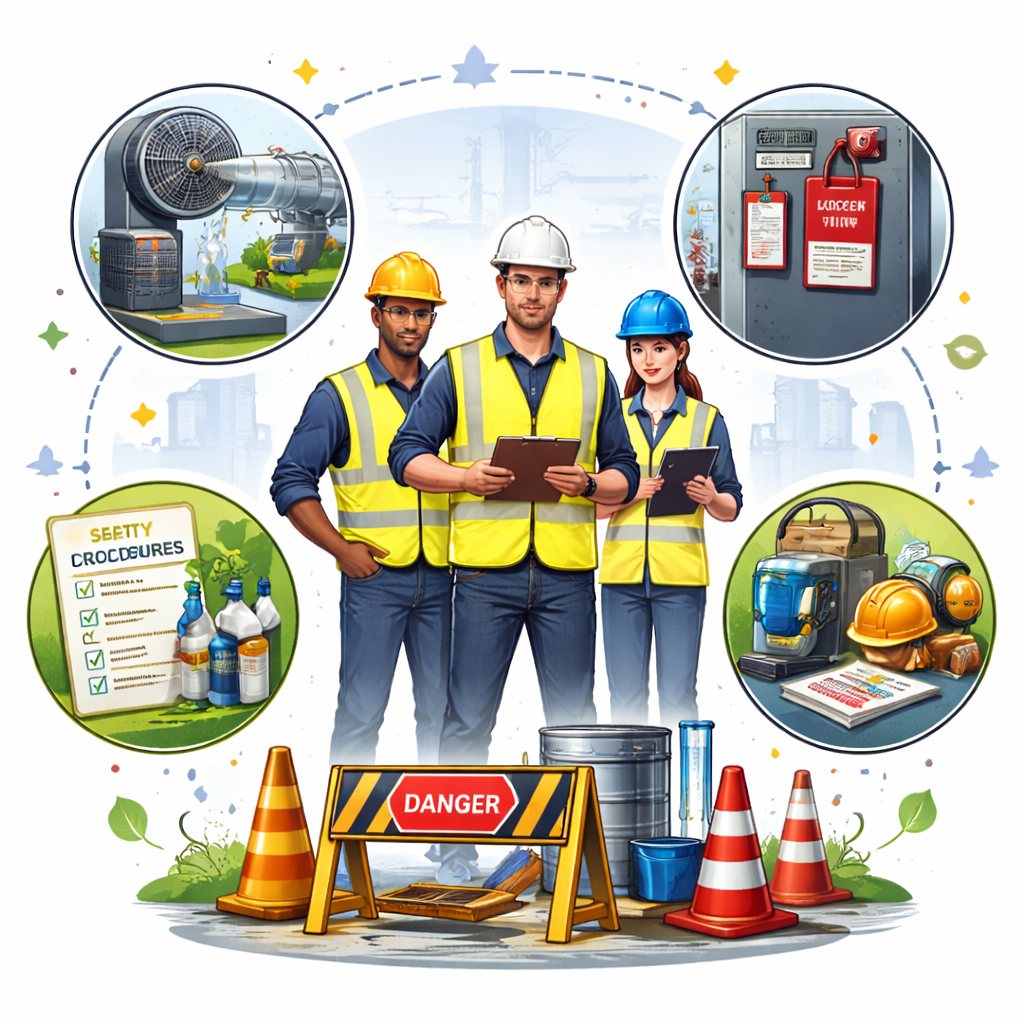
The course introduces the hierarchy of controls and explains how organisations can reduce exposure by prioritising more effective measures wherever possible. Learners build awareness of how elimination, substitution, engineering controls, administrative controls, and PPE each contribute to risk reduction, along with the importance of applying controls thoughtfully rather than treating them as a checklist.
For employers, this training supports stronger safety thinking across the workforce. It helps teams better understand why some controls are more reliable than others, why review and follow-through matter, and how safer control choices can improve both protection and operational consistency.
Learning Outcomes
✓ Understand the purpose of hazard controls in reducing workplace risk
✓ Recognise that some control measures are more effective than others
✓ Build awareness of the hierarchy of controls and how it supports better decision-making
✓ Understand the role of elimination, substitution, engineering controls, administrative controls, and PPE
✓ Improve awareness of why PPE should not be the only control where stronger measures are possible
✓ Support safer planning, implementation, and review of workplace control measures
✓ Contribute to a more proactive and prevention-focused safety culture
Who This Is For
This course is especially suitable for:
Employees across general workplaces
Supervisors and team leaders
Safety coordinators
Operational and maintenance staff
Managers responsible for risk controls
Anyone involved in hazard reduction
It is ideal for organisations that want to improve the quality of their control decisions, strengthen understanding of risk reduction across teams, and move toward a more prevention-focused approach to workplace safety.
Better controls create better protection
The most effective safety decisions do more than warn people about hazards. They reduce exposure in smarter, stronger, and more reliable ways.
Give your workforce the practical knowledge to understand hazard controls, support better risk reduction decisions, and help create a workplace where prevention comes before reaction.
Related topics: personal protective equipment, PPE selection, PPE use, PPE maintenance, hazard assessment, eye protection, hand protection, respiratory protection, hearing protection, protective clothing, workplace safety, compliance training