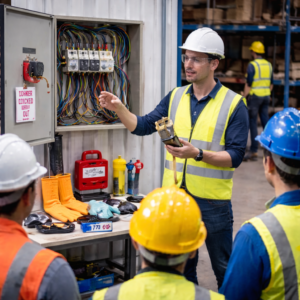
Warehouse Safety Training
Reduce warehouse risk, protect your people, and build safer habits across every shift
Warehouses move fast, and when safety awareness falls behind the pace of work, the consequences can be serious. This course helps learners recognise common warehouse hazards, understand safer work practices, and contribute to a more controlled, efficient, and safety-focused operation.
Why this course matters
Warehouses combine moving vehicles, pedestrian activity, storage systems, manual handling, loading operations, and fast-paced workflows. Without strong awareness and consistent safe behaviour, routine tasks can quickly lead to collisions, strains, slips, falls, damaged goods, and costly disruption.
This training helps turn warehouse safety into an everyday operational strength. Learners build awareness of the conditions and behaviours that create risk, helping teams work more carefully, communicate more clearly, and prevent avoidable incidents before they affect people or productivity.
🏬
Recognise Warehouse Hazards
Improve awareness of the most common risks in active storage and distribution environments.
🚜
Support Safer Vehicle and Pedestrian Interaction
Reinforce safer thinking around forklifts, traffic routes, visibility, and movement around equipment.
📦
Reduce Manual Handling Risk
Help learners understand safer handling habits, load awareness, and better movement practices.
📋
Build More Consistent Safety Behaviour
Encourage better housekeeping, reporting, awareness, and day-to-day operational discipline.
Course Overview
Warehouse Safety Training is designed to give learners a practical understanding of the risks commonly found in warehouse and storage environments, along with the behaviours and controls that support safer day-to-day operations.
The course focuses on the realities of warehouse work, including vehicle movement, pedestrian safety, manual handling, storage awareness, access routes, housekeeping, and general operational hazards. It helps learners understand how incidents develop and what safer work looks like in environments where speed, coordination, and visibility all matter.
For employers, this training supports a stronger safety culture across warehouse teams. It helps improve hazard awareness, reduce preventable mistakes, and create a more consistent standard of care across receiving, storage, picking, packing, loading, and general movement throughout the facility.
Learning Outcomes
✓ Understand the main hazards commonly found in warehouse and storage environments
✓ Recognise how vehicle movement, pedestrian traffic, and poor coordination can increase risk
✓ Improve awareness of manual handling risks and safer movement of loads and materials
✓ Identify the importance of housekeeping, access routes, and clear working areas in preventing incidents
✓ Build awareness of safe behaviour around storage systems, equipment, and day-to-day warehouse tasks
✓ Support safer reporting, stronger hazard awareness, and more consistent workplace safety habits
Who This Is For
This course is especially suitable for:
Warehouse operatives
Pickers and packers
Loading and unloading teams
Supervisors and team leaders
Logistics and distribution staff
New starters and refresher learners
It is ideal for organisations that want to improve warehouse safety awareness, reduce preventable incidents, and strengthen consistent safe behaviour across all areas of storage, handling, and distribution work.
Safer warehouses run better
When teams understand the risks around movement, storage, equipment, and handling, they make better decisions, work with more discipline, and reduce the chance of injuries and costly interruptions.
Give your workforce practical warehouse safety awareness that supports stronger performance, safer operations, and a more reliable standard of care across every shift.
Related topics: warehouse safety, material handling, forklift safety, pallet storage, racking safety, loading dock safety, pedestrian safety, manual handling, equipment inspection, hazard controls, incident prevention, workplace safety