Work at Height & Safety Management
Fall Protection Program Development
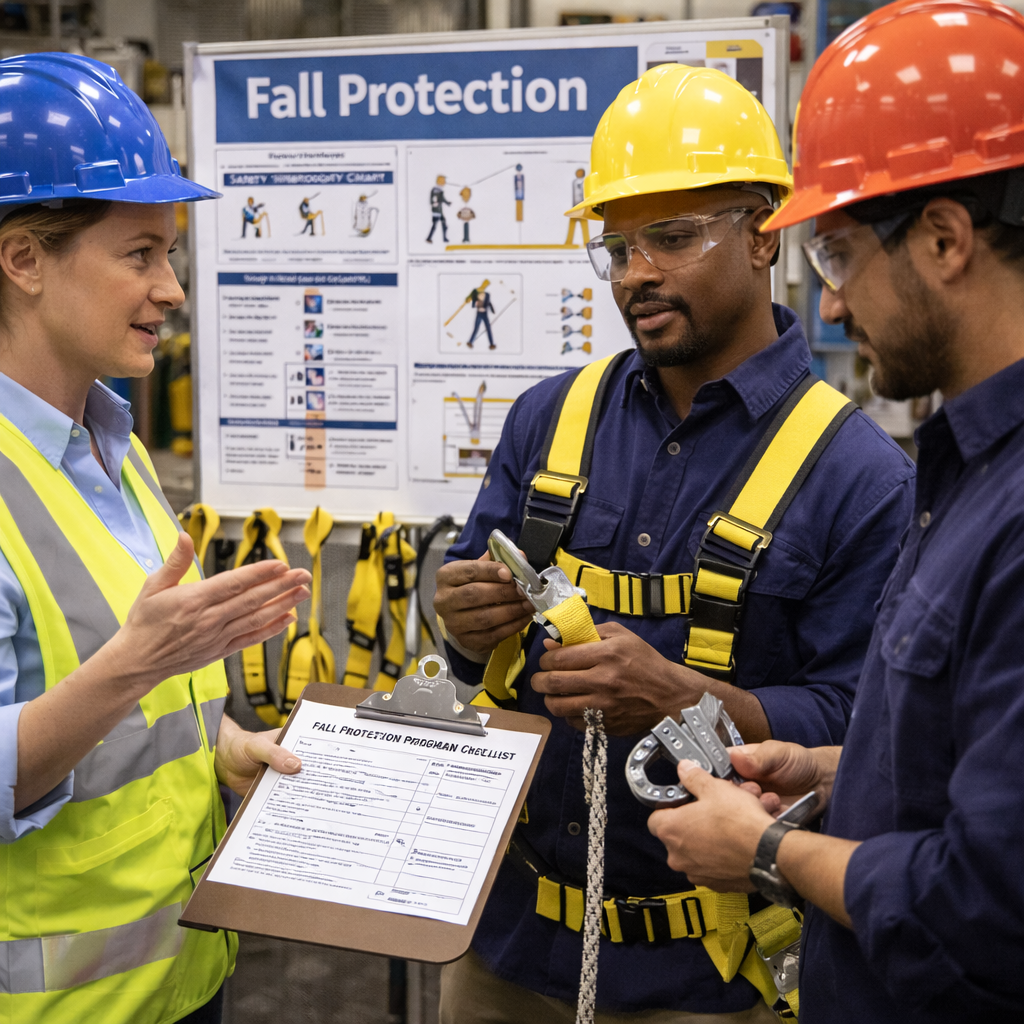
A fall protection program is more than a policy document. It is the framework that helps teams identify fall hazards, choose the right protective measures, define responsibilities, and prevent serious incidents before work begins. This course helps learners build a stronger understanding of how to develop and support a fall protection program that promotes safer planning, better compliance, and more confident decision-making at height.
Why this course matters
Fall hazards remain one of the most serious risks in many workplaces. When program responsibilities are unclear, hazards are not evaluated properly, or protection methods are applied inconsistently, the consequences can be severe for both workers and the organization.
This training is designed to help move your approach from reactive to proactive. Instead of relying on scattered procedures or informal practices, learners gain a clearer foundation for developing a more organized, practical, and prevention-focused fall protection program.
What you will gain
🏗️
A stronger program foundation
Understand the core elements that support an effective fall protection program, from hazard awareness to implementation and oversight.
🛡️
Better hazard control decisions
Improve your ability to recognize fall hazards and support appropriate protective measures for different work situations.
✅
More confident compliance support
Gain practical insight into how clearer planning, responsibilities, and communication can strengthen program consistency and accountability.
Course overview
Fall Protection Program Development is designed for professionals who need to create, improve, manage, or support workplace systems for preventing falls. The course focuses on the program-development side of fall protection, helping learners understand how policy, planning, hazard recognition, responsibilities, training, and follow-through work together to support safer work at height.
Whether your goal is to strengthen an existing safety system or build a more structured approach from the ground up, this training supports a more organized and prevention-focused framework for managing fall hazards across the workplace.
Learning Outcomes
- Understand the purpose of a fall protection program and how it supports safer work at height.
- Recognize the key components that contribute to an organized and effective fall protection management approach.
- Improve awareness of common fall hazards associated with elevated work areas, openings, ladders, roofs, platforms, and related tasks.
- Support better decision-making around protective measures, responsibilities, and safe work planning.
- Strengthen understanding of how training, communication, and accountability contribute to consistent program implementation.
- Identify common gaps that can weaken fall protection practices, including poor coordination, incomplete planning, or inconsistent follow-through.
- Contribute to a safer workplace by helping create a more proactive, structured, and prevention-focused fall protection system.
Who This Is For
Safety Officers & EHS Professionals
Ideal for professionals responsible for developing, reviewing, or improving fall protection systems and procedures.
Supervisors, Managers & Team Leaders
Useful for those who oversee work at height, coordinate crews, and need stronger control over planning and execution.
Operations, Maintenance & Compliance Support Staff
A strong fit for anyone involved in coordinating safe access, work-at-height procedures, inspections, training support, or program oversight.
Build a fall protection program that supports safer work every day
Strong fall protection starts long before anyone steps onto a ladder, platform, roof, or elevated work surface. It starts with planning, structure, communication, and a clear commitment to prevention.
This course helps learners strengthen that foundation so they can support better decisions, clearer responsibilities, and a more dependable approach to managing fall hazards across the organization.
Related topics: fall protection, slip trip fall prevention, walking working surfaces, ladder safety, stairway safety, guardrails, personal fall arrest systems, hazard inspection, work at height, scaffolding, incident prevention, workplace safety