Ethylene Oxide Safety Training
Control Exposure Early. Protect Staff Better. Prevent Ethylene Oxide Risks Before They Escalate.
Ethylene oxide is highly effective in specialist sterilization processes, but it also carries serious workplace risks when it is not managed correctly. From invisible airborne exposure and respiratory irritation to long-term health concerns, the danger is often greater than it first appears. This course helps learners understand the hazards clearly and apply safer practices that strengthen protection, compliance, and confidence in real working environments.
Why This Training Matters
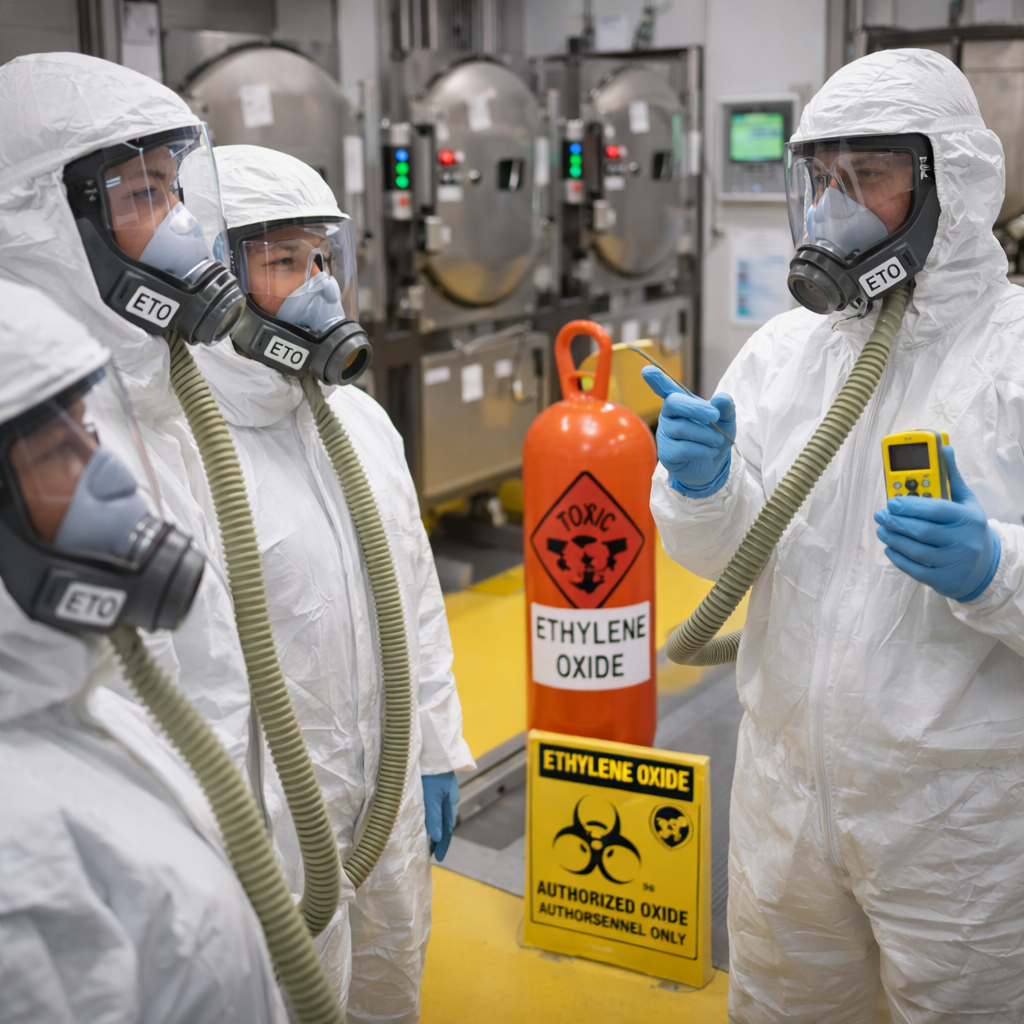
Ethylene oxide hazards are easy to underestimate because exposure can happen during normal-looking tasks such as sterilization, loading, unloading, maintenance, transfer, aeration, or handling treated materials. Poor ventilation, weak procedures, inadequate monitoring, and limited awareness can all increase risk for workers without obvious warning signs.
This training helps teams move from basic awareness to practical control by showing where exposure happens, why it matters, and what actions make the greatest difference in protecting people and operations.
What Makes This Course Valuable
Stronger Exposure Awareness
Understand where ethylene oxide risks arise, why exposure may go unnoticed, and how routine activities can create significant health concerns.
Better Control of High-Risk Tasks
Build practical awareness of containment, ventilation, safe handling, maintenance, monitoring, and disciplined work practices that reduce exposure.
Improved Occupational Health Protection
Support a workplace culture that takes chemical exposure seriously, encourages early reporting, and applies stronger controls before problems develop.
Course Overview
This course provides a practical introduction to ethylene oxide safety in the workplace. It focuses on the health and operational risks linked to exposure, the activities and conditions that increase those risks, and the essential controls that help protect workers during use, sterilization processes, maintenance, handling, and response to unsafe conditions.
It is designed for organizations that want stronger chemical safety awareness and for learners who need a clear understanding of how to work more safely around ethylene oxide in healthcare, laboratory, sterilization, or industrial settings.
Learning Outcomes
By the end of this course, learners should be able to:
- Explain what ethylene oxide is and why it presents significant workplace health and safety risks.
- Recognize common tasks and environments where ethylene oxide exposure may occur.
- Identify the main routes of exposure and understand why airborne exposure is especially important.
- Recognize the difference between short-term effects and longer-term health concerns linked to exposure.
- Understand the importance of engineering controls, ventilation, containment, monitoring, and safe work practices.
- Describe the role of inspection, maintenance, labeling, local procedures, and suitable personal protective equipment in reducing risk.
- Recognize why odor should not be relied upon as a warning sign for unsafe exposure.
- Support safer reporting and earlier action when leaks, process issues, symptoms, or unsafe conditions are identified.
Who This Is For
- Sterile services, central supply, and healthcare personnel involved in ethylene oxide sterilization or handling sterilized items.
- Laboratory, manufacturing, and technical workers who may use or work near ethylene oxide processes or equipment.
- Maintenance and facilities personnel responsible for equipment checks, servicing, ventilation, or process support.
- Supervisors and managers responsible for chemical safety, exposure control, and safe operating procedures.
- Health and safety professionals seeking stronger awareness of ethylene oxide hazards and preventive controls.
- Organizations aiming to improve compliance, reduce exposure risk, and strengthen occupational health protection in high-risk work areas.
Why Add This Course to Your Safety Program
Ethylene oxide risks are far easier to control when workers understand them before exposure occurs. Training helps teams recognize higher-risk activities, follow safer work practices more consistently, and understand why control systems, monitoring, and reporting matter so much in protecting worker health.
For employers, that means stronger prevention, better exposure control, and more reliable safety performance. For learners, it means practical knowledge they can apply immediately in real workplace situations where chemical safety cannot be left to guesswork.
Build a Safer Approach to Ethylene Oxide Handling
Safer chemical operations start with awareness, discipline, and the right controls in place before exposure happens. This course helps teams strengthen those essentials and create a more protective, better-informed workplace wherever ethylene oxide is part of the job.
Related topics: ethylene oxide safety, sterilization hazards, chemical exposure, exposure monitoring, ventilation, PPE, emergency response, healthcare safety, hazard communication, occupational health, regulatory compliance, workplace safety